

A heat pump is the single largest mechanical decision in most net-zero renovations, and it is also the piece of equipment most commonly sized incorrectly. Heat pump installation net-zero projects depend on doing three things in the right order: confirming the home’s actual heating and cooling load with a Manual J calculation, choosing the right system architecture for the specific house, and installing it only after envelope work has already reduced that load. Skip any one of these steps and the result is either an oversized system that short-cycles and wastes money, or an undersized one that leaves occupants cold on the coldest night of the year.
That sizing discipline matters more in 2026 than it did just a year earlier. The federal Section 25C tax credit, which covered 30 percent of qualifying heat pump costs up to 2,000 dollars, expired for property placed in service after December 31, 2025, shifting the financial calculus toward state and utility rebates that still range from a few hundred to several thousand dollars depending on efficiency ratings.
Meanwhile, cold-climate heat pump technology has matured considerably: modern inverter-driven units now maintain substantial heating capacity at 5 degrees Fahrenheit, with some cold-climate models rated to operate as low as negative 13 to negative 15 degrees, making all-electric heating a genuinely reliable choice even in the coldest US climates.
This guide walks through the complete process of heat pump installation net-zero projects require — the different system types and when each makes sense, the Manual J load calculation that should never be skipped, cold-climate performance considerations, electrical capacity requirements, the actual installation process, realistic 2026 costs, and how heat pump sizing connects directly to solar sizing later in the renovation.
What Does Heat Pump Installation for a Net-Zero Renovation Involve?
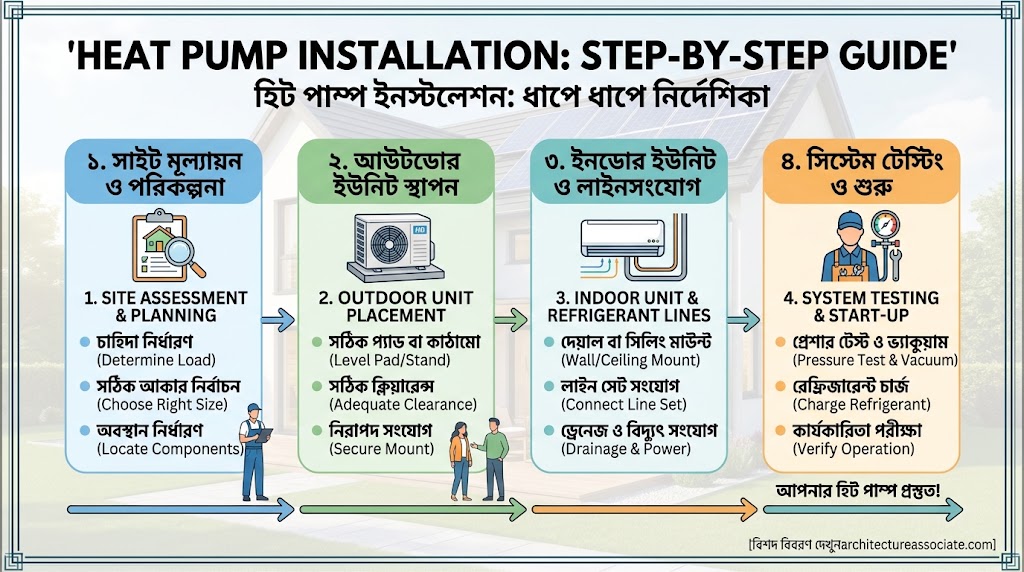
Heat pump installation net-zero work involves selecting the right heat pump architecture for a specific home, confirming its correct size through a Manual J load calculation rather than square footage alone, verifying the electrical panel can support the new load, and having a licensed contractor complete refrigerant line installation, evacuation, pressure testing, and commissioning.
For a typical whole-home air-source system, installed costs in 2026 range from roughly 7,500 to 15,000 dollars, with high-end variable-speed systems reaching 20,000 dollars or more before incentives. Because a net-zero renovation should always address building envelope improvements first, the heat pump should be sized to the home’s reduced, post-retrofit heating and cooling load rather than its original, less efficient baseline.
1. Choosing the Right Heat Pump installation System Type

The first decision in any heat pump installation net-zero project is which system architecture actually fits the home. Air-source heat pumps dominate residential installations, pulling heat from outdoor air through an outdoor condenser connected to an indoor air handler by refrigerant lines, and they now perform reliably across most US climates thanks to improved cold-climate engineering. Ducted systems make sense for homes with existing, well-sized ductwork in good condition, effectively replacing an old furnace and air conditioner in a single retrofit, while ductless mini-split systems suit homes without ducts entirely, older housing stock, additions, or converted spaces where installing new ductwork would be prohibitively invasive.
Ground-source, or geothermal, heat pumps represent a genuinely different category within heat pump installation net-zero planning. By exchanging heat with the relatively stable underground temperature of roughly 50 degrees Fahrenheit year-round rather than variable outdoor air, geothermal systems deliver the highest operational efficiency and longest service life of any residential HVAC option, making them a particular favorite in net-zero projects prioritizing long-term energy stability over upfront cost.
That efficiency comes at a real price, however: geothermal installation costs run two to three times higher than air-source systems specifically because of the excavation required for the underground loop piping, a tradeoff that only pencils out for homeowners planning to stay in the home long enough to recoup that upfront investment through decades of lower operating costs.
2. Never Skip the Manual J Load Calculation
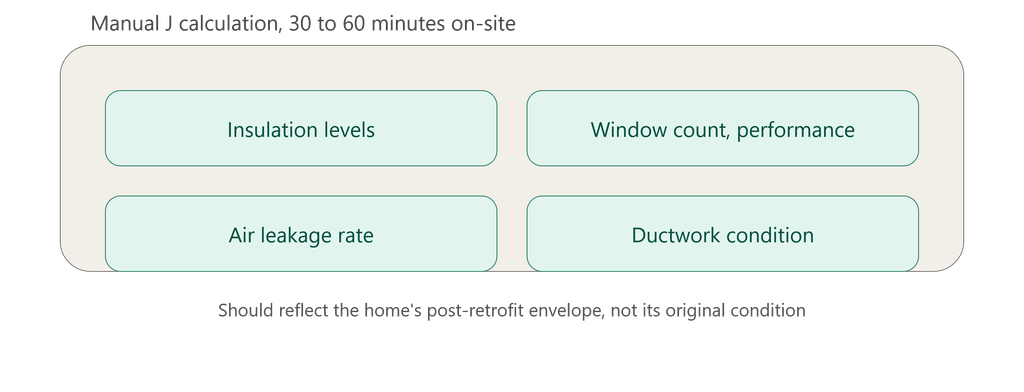
Among every step in heat pump installation net-zero projects require, the Manual J load calculation is the one most frequently skipped, and skipping it is the single most common cause of homeowner dissatisfaction. A proper Manual J calculation takes a technician roughly 30 to 60 minutes on-site and accounts for the home’s actual insulation levels, window count and performance, air leakage rate, and existing ductwork condition, producing a genuine engineering estimate of heating and cooling load rather than a rough guess based on square footage alone.
Installers who size a system purely off square footage, without this calculation, are effectively guessing, and that guess routinely errs toward oversizing, which causes a heat pump to short-cycle, run inefficiently, and struggle to properly dehumidify a home during cooling season.
That calculation becomes even more consequential specifically because the home is being renovated toward net-zero performance. If air sealing and insulation upgrades are already planned or complete, the Manual J calculation should reflect the home’s improved, post-retrofit envelope rather than its original condition, since sizing a heat pump to a leaky, poorly insulated baseline produces a system that is meaningfully oversized once the envelope work is finished. Homeowners should specifically ask their installer whether the Manual J calculation accounts for planned or completed envelope improvements, not just the home’s current, pre-renovation state.
3. Cold-Climate Performance and Backup Heat Decisions
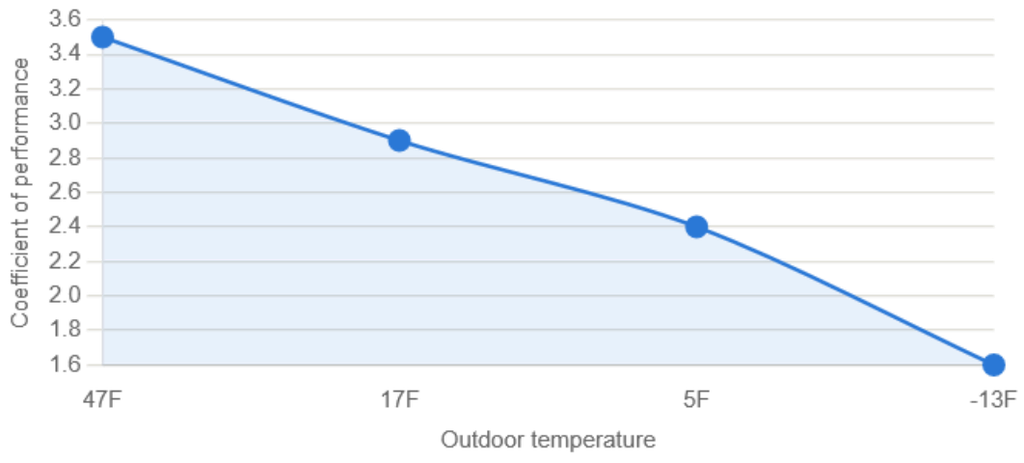
For homeowners in colder regions, heat pump installation net-zero planning requires genuine scrutiny of cold-climate performance specifications rather than assuming any heat pump will perform adequately through winter. Cold-climate heat pumps are specifically engineered to maintain a high coefficient of performance and substantial heating capacity at low temperatures, typically rated down to negative 15 degrees Fahrenheit, using inverter-driven compressors that modulate output continuously rather than cycling on and off at a fixed capacity.
Leading cold-climate models now publish AHRI-certified performance data showing a coefficient of performance around 2.4 to 2.5 even at 5 degrees Fahrenheit outdoor temperature, meaning the system still delivers more than twice as much heat energy as the electrical energy it consumes even in genuinely harsh conditions.
Homeowners should verify low-ambient heating capacity, defrost strategy, and AHRI certification for the exact model under consideration, since specifications can shift meaningfully between refrigerants and model years within the same manufacturer’s lineup. In particularly harsh climates, a backup heat source, whether existing gas furnace capacity retained as a hybrid system or electric resistance backup, may still be a sensible safety margin for the most extreme cold snaps, though this decision should be made deliberately based on documented cold-climate performance data rather than reflexive caution that undermines the broader heat pump installation net-zero goal of fully electrifying the home’s heating system.
4. Verifying Electrical Capacity Before Installation
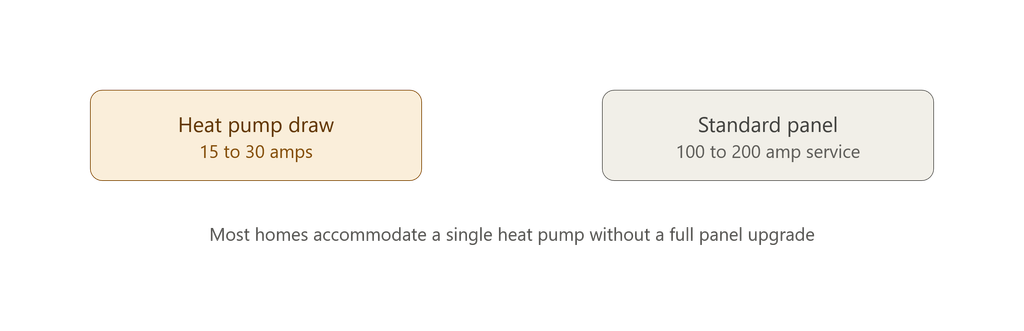
Adding a heat pump increases a home’s electrical load, making panel capacity a genuine prerequisite step in heat pump installation net-zero planning rather than an afterthought discovered mid-project. A typical residential heat pump in the 2 to 5 ton range draws roughly 15 to 30 amps, a load most homes with standard 100-amp or 200-amp electrical service can accommodate without a full panel upgrade. That said, homeowners simultaneously adding an EV charger, an induction cooktop, and other electrified appliances as part of a broader electrification renovation may collectively push total demand high enough to require a panel upgrade to 200-amp or even 400-amp service.
This is precisely why electrical capacity verification belongs early in the renovation sequence, alongside the mechanical planning itself, rather than treated as an isolated electrician’s decision made independently of the heat pump specification. A licensed electrician should evaluate total planned electrical load across every electrification measure in the renovation simultaneously, not just the heat pump in isolation, since sequencing individual trades without this coordinated view is exactly how homeowners end up paying for a mid-project panel upgrade that could have been planned and budgeted from the outset.
5. The Actual Installation Process
Once sizing and electrical capacity are confirmed, heat pump installation net-zero work proceeds through a fairly standardized sequence regardless of system type. A licensed HVAC technician mounts the outdoor condenser on a pad or wall bracket, runs refrigerant line sets between outdoor and indoor units, completes the electrical connection including a dedicated disconnect and any required surge protection, and for ductless systems, mounts indoor wall or ceiling units and manages condensate drainage. Before the system can operate, technicians must evacuate air and moisture from the refrigerant lines, pressure test the complete circuit for leaks, and commission the system according to manufacturer specifications.
While do-it-yourself, precharged mini-split kits have become more widely available and can offer genuine savings of 1,000 to 2,000 dollars over a fully contracted installation, most manufacturers require licensed professional installation to maintain full warranty coverage, and many local codes mandate a licensed electrician or HVAC professional regardless of the specific product purchased. Homeowners considering a DIY approach as part of heat pump installation net-zero work should weigh that potential savings carefully against the real risk of voided warranty coverage or code violations discovered later during a home sale or insurance claim.
6. Realistic 2026 Costs and Available Incentives
Budgeting accurately for heat pump installation net-zero work requires current cost data, since pricing and incentive structures shifted meaningfully at the start of 2026. A typical whole-home air-source heat pump system, ducted or multi-zone ductless, runs roughly 7,500 to 15,000 dollars installed, including labor, with high-end variable-speed systems reaching 20,000 dollars or more. Single-zone ductless mini-split installations run considerably less, typically 4,000 to 10,000 dollars depending on capacity and the number of indoor heads required.
With the federal Section 25C credit expired as of December 31, 2025, that specific 30 percent, 2,000-dollar-maximum credit no longer applies to purchases made in 2026, a genuinely significant shift from prior years. State and utility rebate programs remain the primary source of remaining financial support, ranging from a few hundred to several thousand dollars depending on the specific efficiency ratings, SEER2 and HSPF2 scores, and cold-climate certification of the chosen equipment. Homeowners should request the AHRI certificate for the exact indoor and outdoor model combination being quoted, since rebate eligibility is typically tied to that specific certified pairing rather than the product line broadly.
7. Connecting Heat Pump Sizing to Solar Sizing
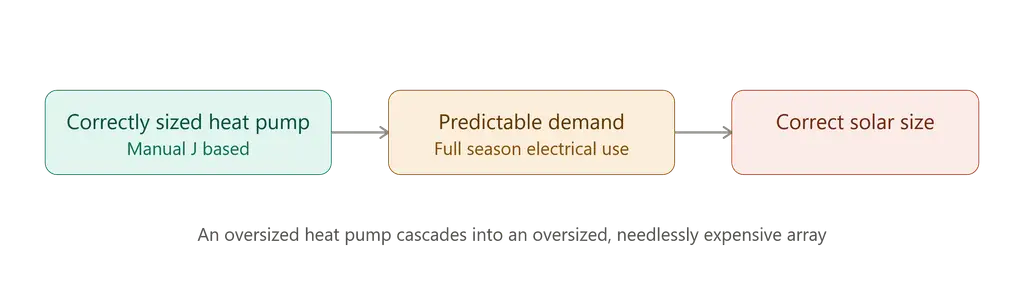
The final consideration in heat pump installation net-zero planning is how the heat pump’s electrical demand feeds directly into solar system sizing later in the project. A correctly sized heat pump, matched to a home’s post-envelope-retrofit load through a proper Manual J calculation, draws a specific, predictable amount of electricity across a full heating and cooling season, and that consumption figure becomes a primary input for sizing the eventual solar array. An oversized heat pump, chosen without a proper load calculation, inflates that electrical demand artificially, cascading into an oversized and needlessly expensive solar system sized to match equipment the home never actually needed.
This connection reinforces why heat pump installation net-zero work belongs firmly in the middle of the broader renovation sequence: after envelope improvements have reduced the underlying heating and cooling load, but before solar sizing locks in a system based on the home’s actual, electrified energy demand. Coordinating the HVAC contractor’s Manual J output directly with the solar installer’s sizing calculation, rather than treating the two as sequential but disconnected decisions, is what keeps the entire net-zero renovation genuinely cost-effective from mechanical equipment through to final generation capacity.
Key Facts: Heat Pump Installation for Net-Zero at a Glance
| Element | Detail |
| Typical whole-home air-source system cost | 7,500 to 15,000 dollars installed |
| High-end variable-speed system cost | 20,000 dollars or more |
| Single-zone ductless mini-split cost | 4,000 to 10,000 dollars |
| Geothermal cost premium | 2 to 3 times air-source cost |
| Typical heat pump electrical draw | 15 to 30 amps (2 to 5 ton system) |
| Cold-climate rated capacity | Down to -13 to -15 degrees F |
| COP at 5 degrees F, leading cold-climate models | Approximately 2.4 to 2.5 |
| Manual J calculation time | 30 to 60 minutes on-site |
| Federal Section 25C credit | Expired for purchases after Dec 31, 2025 |
| DIY kit potential savings | 1,000 to 2,000 dollars |
Frequently Asked Questions About Heat Pump Installation for Net-Zero Renovations
What type of heat pump is best for a net-zero renovation?
Heat pump installation net-zero projects typically use air-source systems for most climates, ducted systems when existing ductwork is in good condition, ductless mini-splits for homes without ducts, and geothermal systems for homeowners prioritizing maximum long-term efficiency who can absorb the higher upfront excavation cost.
Why is a Manual J load calculation so important?
A Manual J load calculation is essential to heat pump installation net-zero work because it accounts for a home’s actual insulation, windows, air leakage, and ductwork to determine correct system size, rather than relying on square footage alone, which routinely results in oversized equipment that runs inefficiently.
Can heat pumps really work in cold climates?
Yes. Modern cold-climate heat pumps use inverter-driven compressors that maintain substantial heating capacity and a coefficient of performance around 2.4 to 2.5 even at 5 degrees Fahrenheit, with some models rated to operate reliably down to negative 13 to negative 15 degrees, making them viable for genuine heat pump installation net-zero projects in harsh climates.
Do I need to upgrade my electrical panel for a heat pump?
Most homes with standard 100-amp or 200-amp service can accommodate a single heat pump without a panel upgrade, since a typical unit draws only 15 to 30 amps. However, combining a heat pump with other electrification measures like EV charging in a broader heat pump installation net-zero renovation may require a panel upgrade.
How much does heat pump installation cost in 2026?
Heat pump installation net-zero projects typically cost 7,500 to 15,000 dollars for a whole-home air-source system, 4,000 to 10,000 dollars for a single-zone ductless mini-split, and considerably more for geothermal systems, with the federal 25C tax credit no longer available after its expiration on December 31, 2025.
How does heat pump sizing affect solar panel sizing?
A correctly sized heat pump, based on a home’s actual post-retrofit load, determines predictable electrical demand that becomes a key input for solar sizing. An oversized heat pump within heat pump installation net-zero work inflates that demand artificially, resulting in an unnecessarily large and expensive solar array.
Related Posts from Architecture Associate
- How to Convert an Existing Home to Net-Zero Energy
- Best Solar Panel Systems for Net-Zero Home Renovations
- Net-Zero Home Renovation: Complete Guide to Costs & ROI
- Net-Zero vs Energy-Efficient Homes: What’s the Difference
Explore more sustainable design and mechanical system guides in the Architecture category on Architecture Associate.
External References
- Home Energy Planner, Heat Pump Buying Guide 2026: homeenergyplanner.com
- Building America Solution Center, Cold Climate Heat Pump Sizing and Selection: basc.pnnl.gov
- Ecohome, 2026 Heat Pump Guide, Cold-Climate Systems and Rebates: ecohome.net
Final Thoughts
Heat pump installation net-zero success comes down to sequencing and sizing discipline more than any single product choice. The right system type depends on the home’s ductwork, budget, and climate, but no choice matters as much as getting the Manual J calculation right, ideally reflecting the home’s improved envelope rather than its original, leakier baseline.
Cold-climate performance is no longer a genuine limitation for most US homeowners, electrical capacity is rarely the obstacle homeowners fear it will be, and the resulting, correctly sized electrical demand becomes the foundation for sizing solar generation later in the project. Get the heat pump right, sized to what the home actually needs after envelope work is complete, and every subsequent decision in the net-zero renovation becomes considerably easier and more affordable.