

Architectural acoustics is the science and practice of controlling sound within and around buildings to create spaces that meet specific auditory needs. Whether you are an architecture student encountering acoustics for the first time, a practitioner designing a concert hall, or a building professional working on office noise control, understanding the basics of acoustic design is not optional — it is essential to achieving environments that support human health, comfort, communication, and productivity.
This guide covers the full foundation of architectural acoustics: what sound is, how it behaves in physical media, its key characteristics, and how its strength is measured and described. Every concept here is fundamental to informed building design, and no genuinely good acoustical environment has ever been produced without a working understanding of these principles.




What Is Architectural Acoustics?
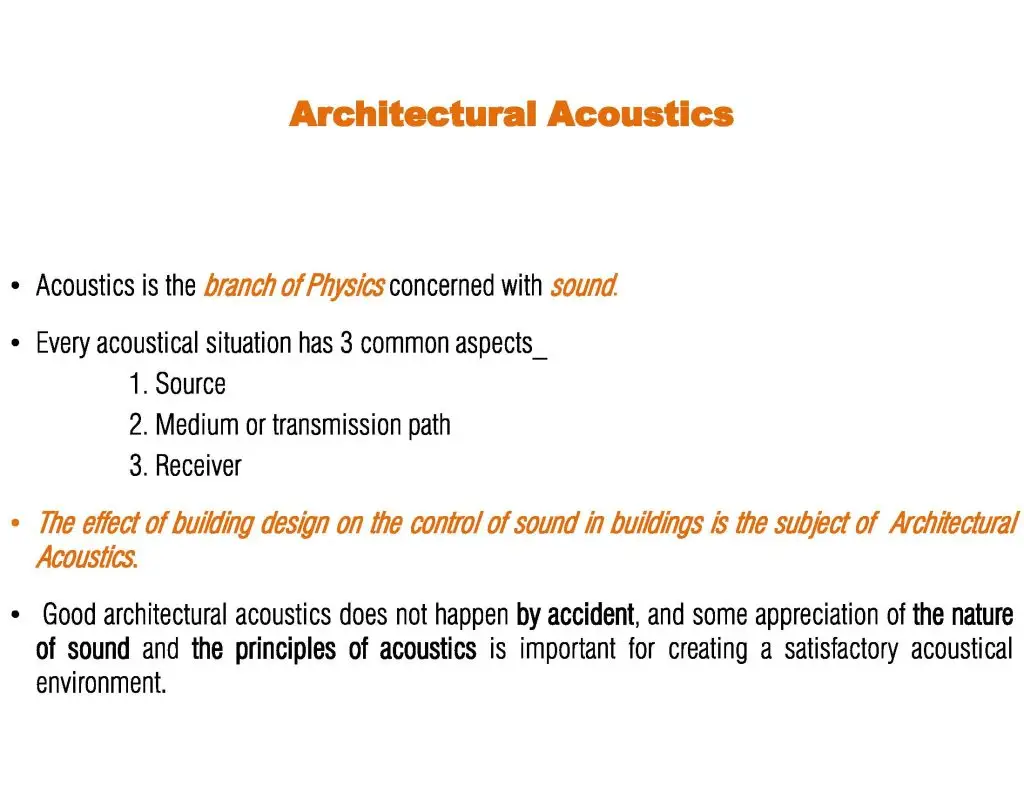
Architectural acoustics is the branch of applied physics concerned with the behavior of sound as it interacts with built environments. Every acoustical situation involves three common elements: a source that generates sound, a medium or transmission path through which sound travels, and a receiver — typically a human occupant — who experiences the result.
Good architectural acoustics does not happen by accident. The effect of building design on sound control is profound, and some appreciation of the nature of sound and the underlying principles of acoustics is critical to creating any satisfactory acoustic environment. In today’s built environment, good acoustical design is not a luxury; it is a necessity. Acoustics affects everything from employee productivity in open-plan offices to speech intelligibility in classrooms, from performance quality in concert halls to the market value of residential apartments.
While the science behind sound is well understood, applying that science to create desired acoustical performance within a specific building is a complex, context-dependent challenge. There is no universal acoustical solution that can be applied identically across all building types. The acoustic design requirements for a business conference room differ fundamentally from those of a kindergarten classroom, a recording studio, or a hospital ward. Understanding these differences, and knowing how to use building materials, spatial design, and acoustic technologies to address them, is what distinguishes a building with excellent acoustical performance from one that fails its occupants.
Good architectural acoustics does not happen by accident, and some appreciation of the nature of sound and the principles of acoustics is important for creating a satisfactory acoustical environment.
What Is Sound? The Physical Foundation of Architectural Acoustics
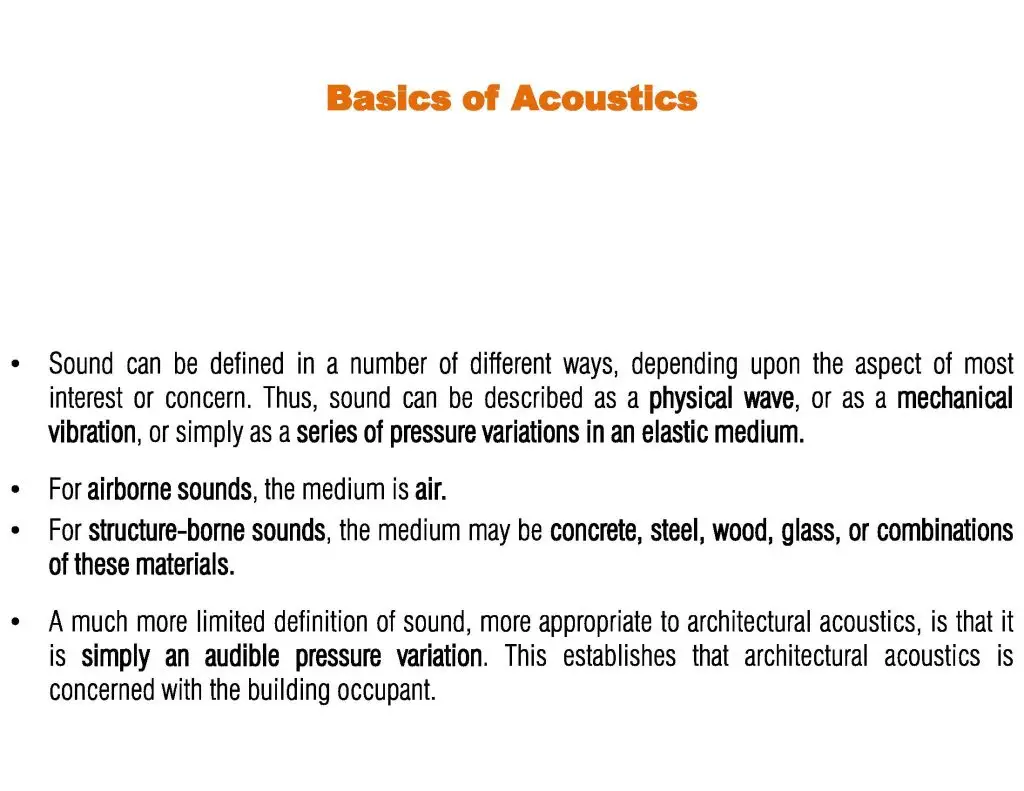
Architectural Acoustics. Sound can be defined in several complementary ways depending on the aspect under consideration. It can be described as a physical wave, as a mechanical vibration, or as a series of pressure variations traveling through an elastic medium. For architectural acoustics, the most relevant definition is that sound is an audible pressure variation — a definition that keeps the focus firmly on the building occupant rather than on abstract physics.
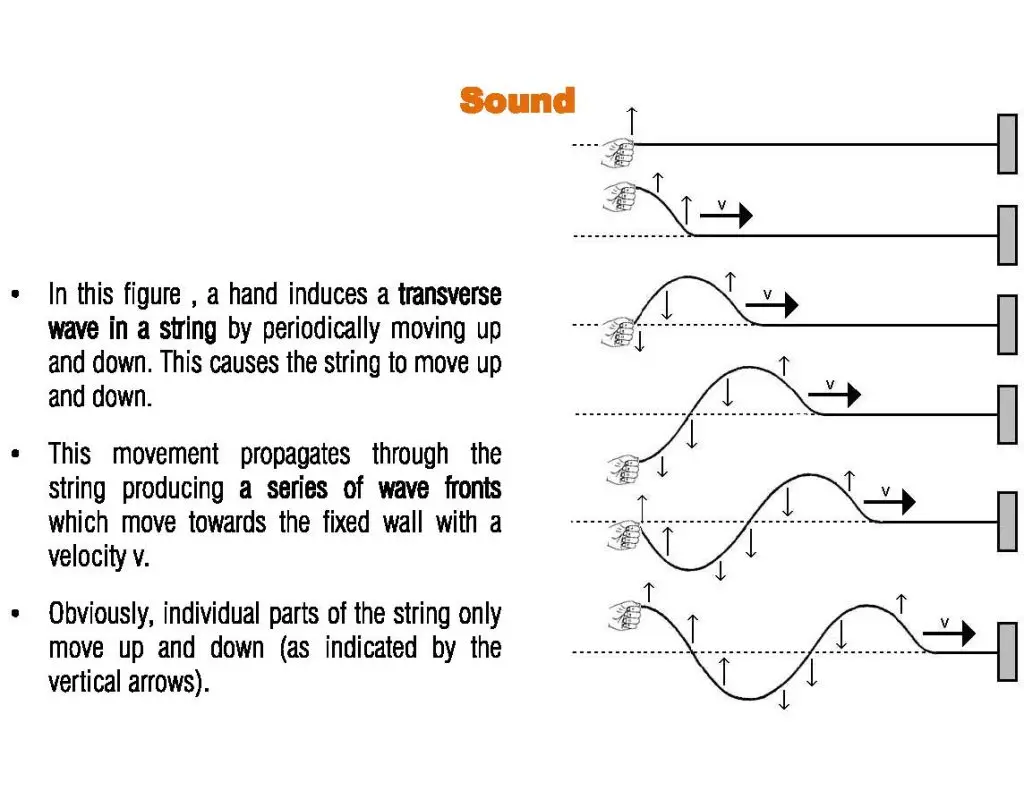
Sound is a wave-like distortion of a physical medium. Two classes of wave can distort a medium: transverse waves and longitudinal waves.
In transverse waves, the elements of the medium move at 90 degrees to the direction in which the wave itself travels. A familiar example is the wave pattern on the surface of a pond after a stone has been thrown in: water molecules move up and down while the wave front moves horizontally across the surface. A hand moving periodically up and down while holding one end of a taut string induces a transverse wave, causing successive wave fronts to travel along the string toward the fixed end. Architectural Acoustics.
In longitudinal waves, the elements of the medium move back and forth in the same direction as the wave front travels. A hand moving back and forth along the axis of a spring creates compressed and rarefied regions that propagate forward with a velocity v while individual coils of the spring only oscillate short distances in the direction of propagation. Sound in air is a longitudinal compression wave: air particles move back and forth, creating alternating regions of high and low pressure that travel outward from the source. Architectural Acoustics.
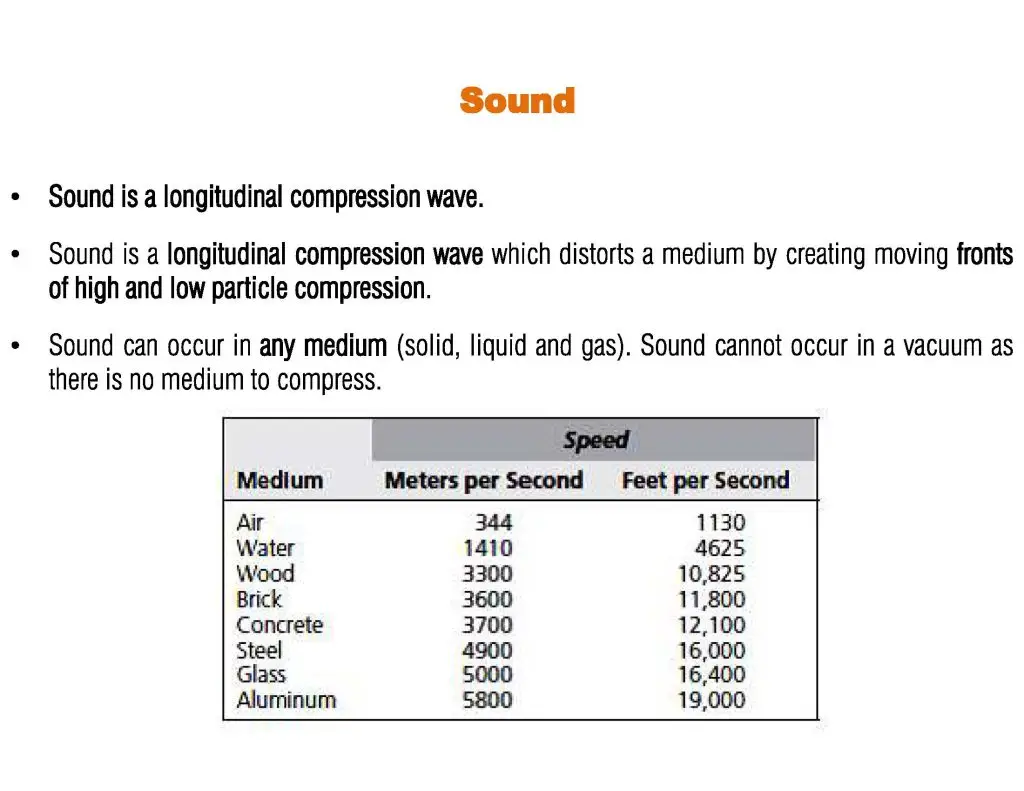
Sound can occur in any medium — solid, liquid, or gas. It cannot occur in a vacuum because there is no medium to compress. The speed at which sound travels depends on the medium, and this has important consequences for architectural acoustics because sound does not only travel through air in buildings. It also travels through the structure itself. Architectural Acoustics.

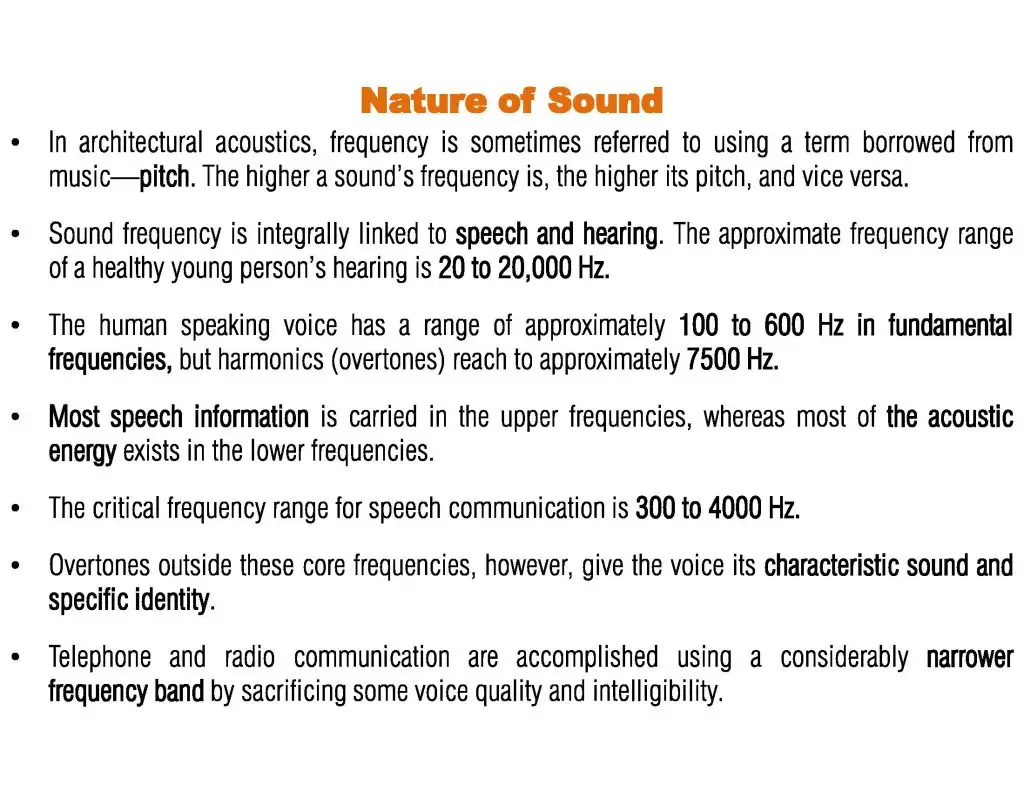
Speed of Sound Across Different Materials
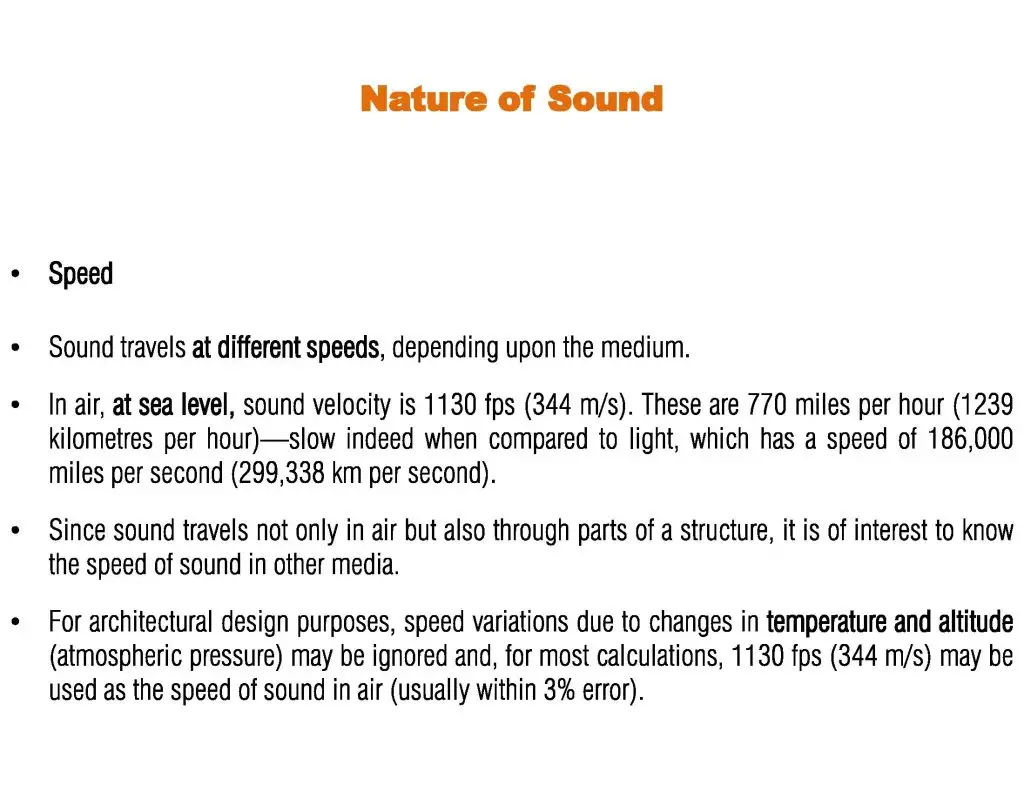
Architectural Acoustics. In air at sea level, sound travels at approximately 344 meters per second (1,130 feet per second). For most architectural calculations, this figure can be used within a 3 percent margin of error, and variations due to temperature or altitude changes are generally small enough to ignore in practice.
However, sound also propagates through structural elements of buildings, and it travels considerably faster through denser materials. The table below summarizes the speed of sound across materials commonly encountered in architectural design:
| Medium | Speed (m/s) | Speed (ft/s) |
|---|---|---|
| Air | 344 | 1,130 |
| Water | 1,410 | 4,625 |
| Wood | 3,300 | 10,825 |
| Brick | 3,600 | 11,800 |
| Concrete | 3,700 | 12,100 |
| Steel | 4,900 | 16,000 |
| Glass | 5,000 | 16,400 |
| Aluminum | 5,800 | 19,000 |
Architectural Acoustics. These figures have direct implications for how structure-borne sound — sound transmitted through building elements such as floors, walls, and columns — behaves differently from airborne sound. A vibration introduced into a concrete slab, for example, travels roughly ten times faster than sound in air, making structural isolation of mechanical equipment, plumbing, and impact noise a critical concern in building design.
The Nature of Sound: Wavelength, Frequency, and Pitch
Understanding the nature of sound requires familiarity with three closely related properties: wavelength, frequency, and pitch.
Wavelength
The wavelength of a sound is the distance between corresponding points on two successive wave cycles — for example, the distance from one compression peak to the next. Wavelength, frequency, and the speed of sound are related by the formula:
Wavelength (lambda) = Speed of sound (c) / Frequency (f)
Where wavelength is measured in meters, speed of sound in meters per second, and frequency in hertz (Hz). Low-frequency sounds have long wavelengths; high-frequency sounds have short wavelengths. Sounds audible to human beings span wavelengths from approximately 12 millimeters (at the highest audible frequencies) to 15 meters (at the lowest audible frequencies) — a range of more than a thousand to one. This enormous range of physical scales is one reason why acoustic design requires attention across many different materials and spatial strategies simultaneously. Architectural Acoustics.
Frequency
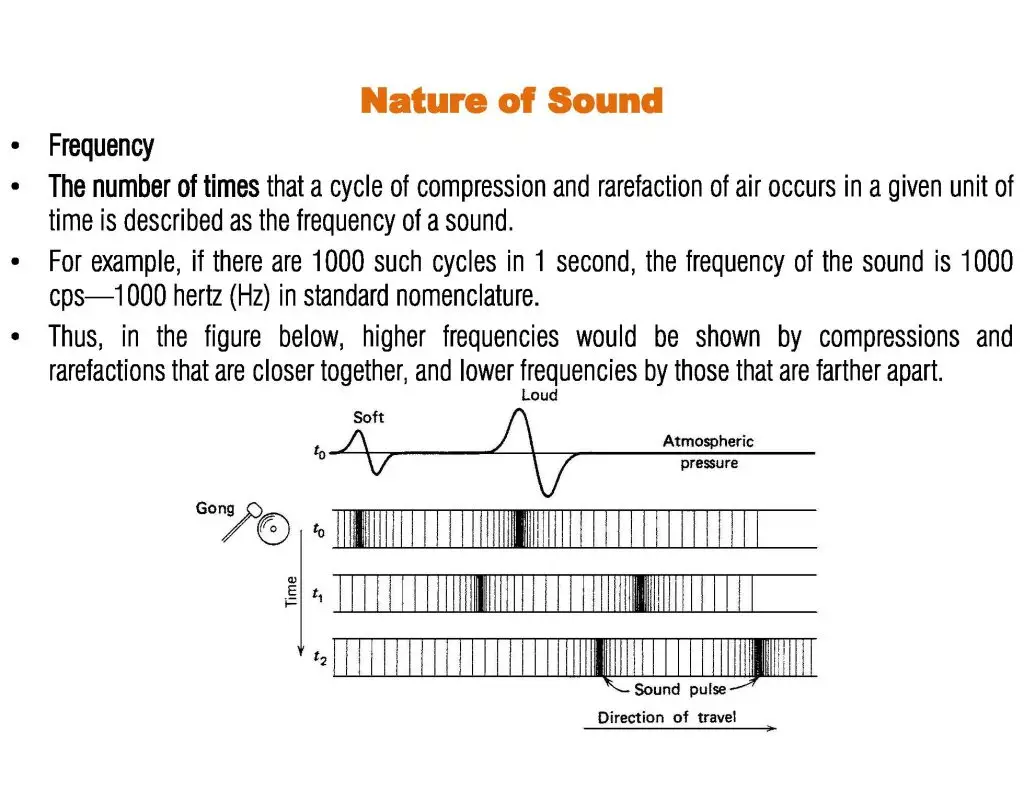
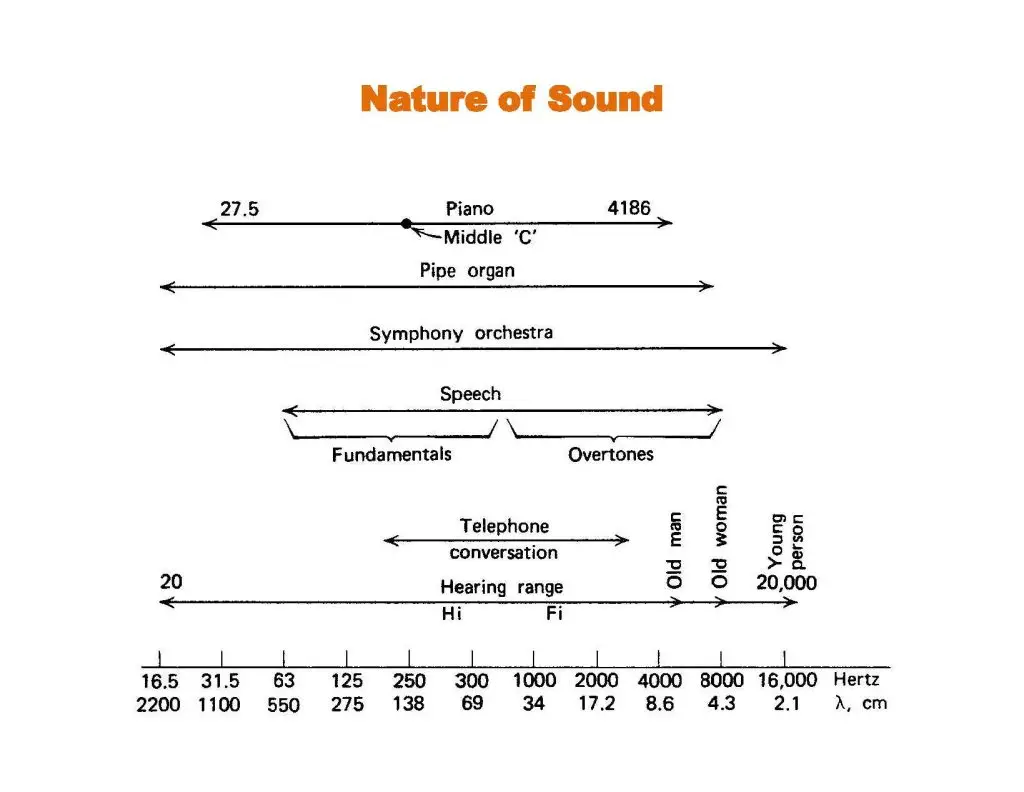
Frequency is the number of complete cycles of compression and rarefaction that occur in one second, measured in hertz (Hz). A sound with 1,000 cycles per second has a frequency of 1,000 Hz. The approximate frequency range of healthy young human hearing extends from 20 Hz to 20,000 Hz. Within this range, different frequency bands carry different types of acoustical information.
The human speaking voice produces fundamental frequencies in the range of approximately 100 to 600 Hz, with harmonics (overtones) that extend to around 7,500 Hz. Most of the acoustic energy in speech is concentrated in the lower frequencies, but most of the information content — the consonants, articulation, and intelligibility — is carried in the upper frequencies. The critical frequency range for speech communication is considered to be 300 to 4,000 Hz. This is the range that must be preserved and protected in the design of classrooms, courtrooms, lecture halls, and any other space where speech intelligibility is a primary performance criterion.
Higher-frequency sounds register as higher pitch; lower-frequency sounds as lower pitch. In architectural acoustics, frequency is sometimes referred to using the musical concept of pitch, though the two terms are not identical.



Pure Tones, Musical Tones, and Complex Sounds
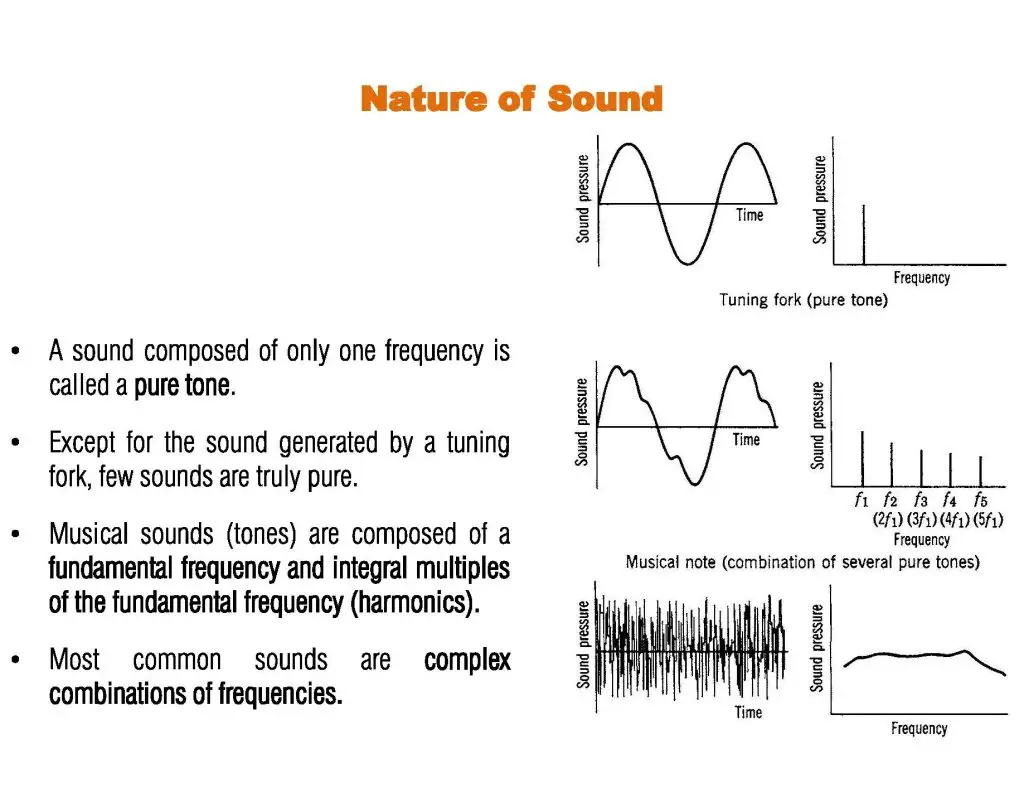
Architectural Acoustics. A sound composed of exactly one frequency is called a pure tone. The sound produced by a tuning fork is the nearest real-world approximation to a pure tone. In practice, nearly all sounds encountered in buildings are complex combinations of many frequencies occurring simultaneously. Musical instruments produce tones composed of a fundamental frequency plus integral multiples of that fundamental — called harmonics or overtones — which give each instrument its characteristic tonal quality. Common environmental sounds, by contrast, contain energy distributed across a wide and irregular range of frequencies, with no clear fundamental.
This complexity is why architectural acoustics cannot be reduced to managing a single number. The performance of a room or a partition must be evaluated across a range of frequencies, not just at one.
Octave Bands: How Frequency Is Organized for Acoustic Analysis
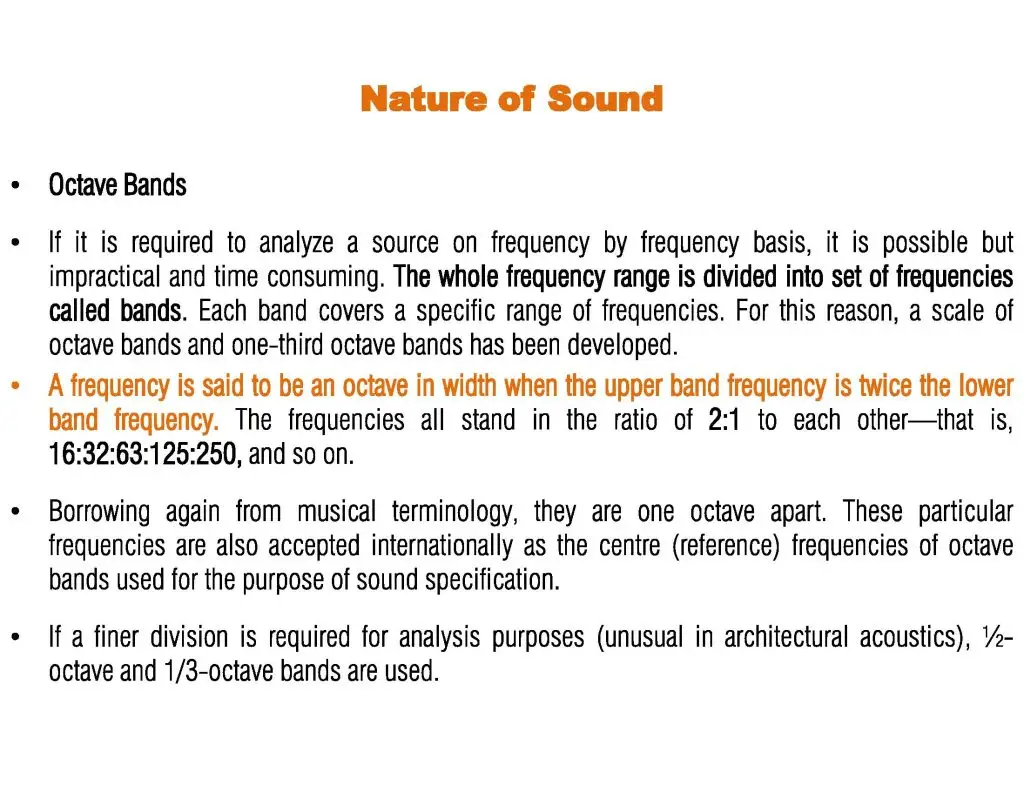
Architectural Acoustics. Because analyzing sound on a frequency-by-frequency basis would be impractical, the audible spectrum is divided into standardized groups called octave bands. A frequency is said to be one octave above another when it is twice the lower frequency. The internationally accepted center frequencies of standard octave bands are 16, 31.5, 63, 125, 250, 500, 1,000, 2,000, 4,000, 8,000, and 16,000 Hz.
| Lower Limit (Hz) | Center Frequency (Hz) | Upper Limit (Hz) |
|---|---|---|
| 11 | 16 | 22 |
| 22 | 31.5 | 44 |
| 44 | 63 | 88 |
| 88 | 125 | 177 |
| 177 | 250 | 355 |
| 355 | 500 | 710 |
| 710 | 1,000 | 1,420 |
| 1,420 | 2,000 | 2,840 |
| 2,840 | 4,000 | 5,680 |
| 5,680 | 8,000 | 11,360 |
| 11,360 | 16,000 | 22,720 |
For most architectural acoustics work, the octave bands centered on 125 Hz through 4,000 Hz are the most practically important, as they cover the critical range of speech and music. When finer frequency resolution is needed — for example, in the design of critical listening environments or the specification of mechanical noise — one-third-octave band analysis can be used, dividing each octave into three equal logarithmic intervals.
Sound Propagation: How Sound Moves Through a Space
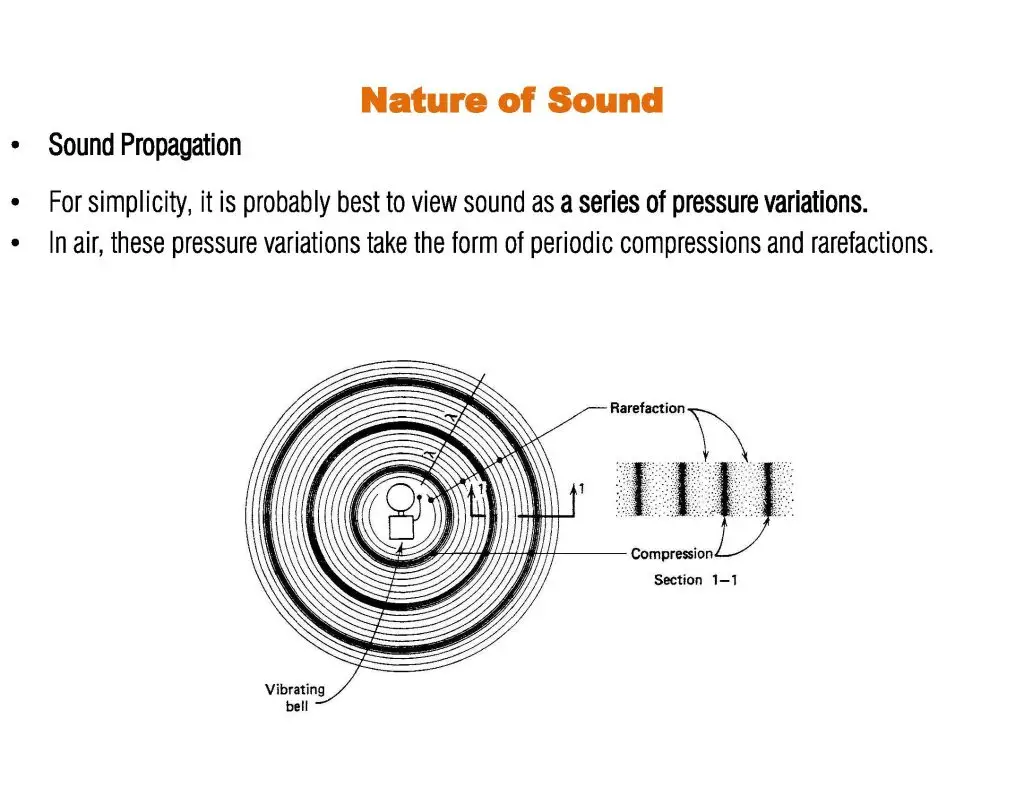
For practical purposes, sound is best understood as a series of pressure variations propagating outward from a source. In the air, these pressure variations take the form of periodic compressions (regions of increased air pressure) and rarefactions (regions of reduced air pressure) radiating outward in all directions from the source. A vibrating bell, for example, radiates sound in all directions simultaneously, creating an expanding spherical wave front. In a cross-section, this appears as a series of concentric rings representing successive compression and rarefaction cycles. Architectural Acoustics.
The wave travels longitudinally — meaning the pressure variations move in the direction of wave propagation — but the information encoded in the wave (its modulation) is transverse. Sound is a mechanical wave, transmitted entirely through the physical movement of particles in a medium, unlike light or electromagnetic signals, which can travel through a vacuum.


Characteristics of Sound: Pitch, Quality, and Loudness
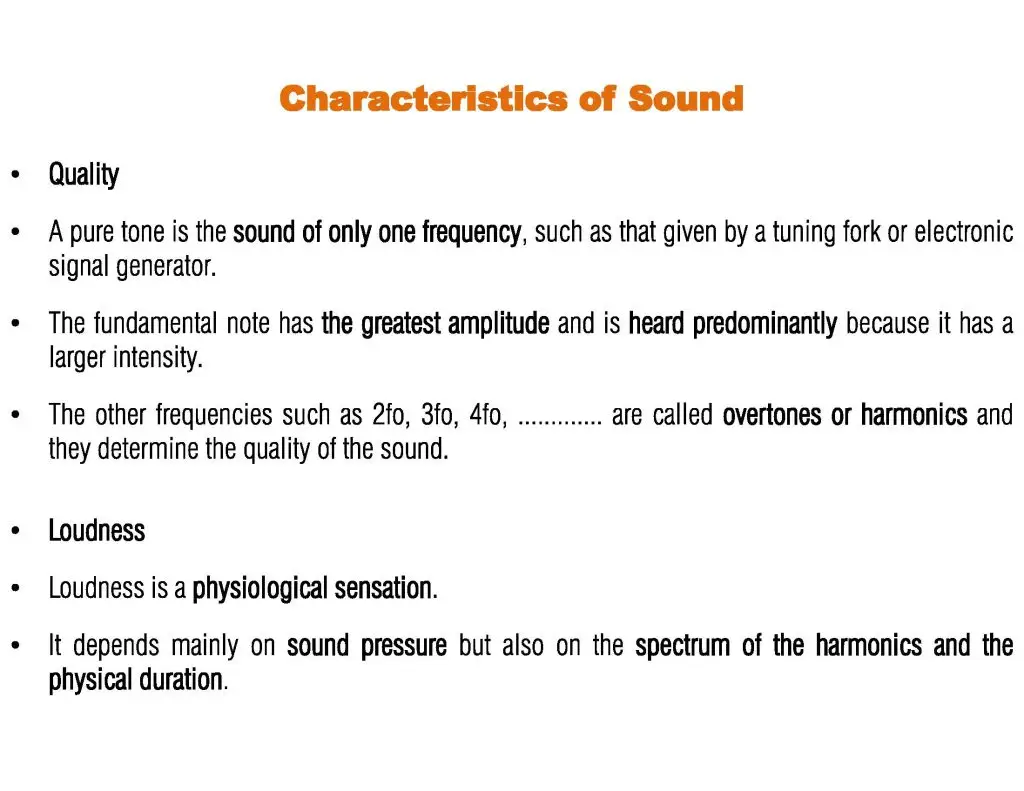
Every sound can be characterized by three perceptual properties.
Pitch corresponds to frequency as perceived by the human ear. Higher frequencies produce higher-pitched sounds; lower frequencies produce lower-pitched sounds. Pitch is subjective — two sounds at the same frequency may not appear equally high to all listeners — but frequency is its primary physical correlate.
Quality, or timbre, refers to the characteristic texture or color of a sound that allows a listener to distinguish between two sounds of the same pitch and loudness. A violin and a trumpet playing the same note at the same volume sound different because their harmonic structures — the relative amplitudes of their overtones — are different. The fundamental note has the greatest amplitude and dominates the perceived pitch, while the overtones determine tonal quality.
Loudness is a physiological and psychological sensation that depends primarily on sound pressure but is also influenced by the frequency spectrum of the sound and its physical duration. Loudness is not linearly related to physical sound power — the relationship is logarithmic, which is why a specialized measurement scale was developed to describe it.
Strength of Sound: Pressure, Intensity, and the Decibel Scale
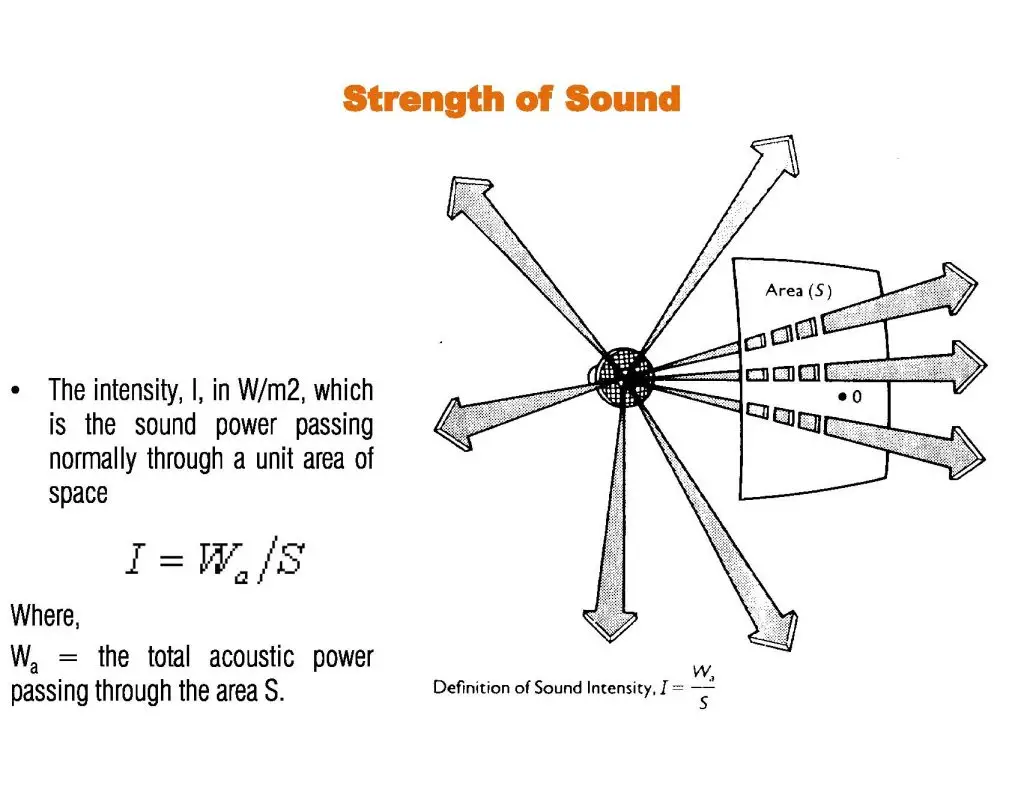
The strength of a sound can be described using two complementary physical measures: pressure amplitude and intensity.
Sound pressure amplitude is measured in pascals (Pa), where one pascal equals one newton per square meter. Because sound pressure in a wave oscillates rapidly between positive and negative values, it is characterized by its root-mean-square (rms) value, which is based on time averaging. The energy in a sound wave is proportional to the square of the pressure amplitude.
Humans are sensitive to an extraordinarily wide range of sound pressures — roughly a million to one from the threshold of audibility to the threshold of pain. The threshold of audibility for a healthy young listener is a sound pressure of approximately 0.00002 pascals (2 x 10^-5 N/m2), while the threshold of pain occurs at around 63 pascals. This range is far too large to express conveniently on a linear scale.
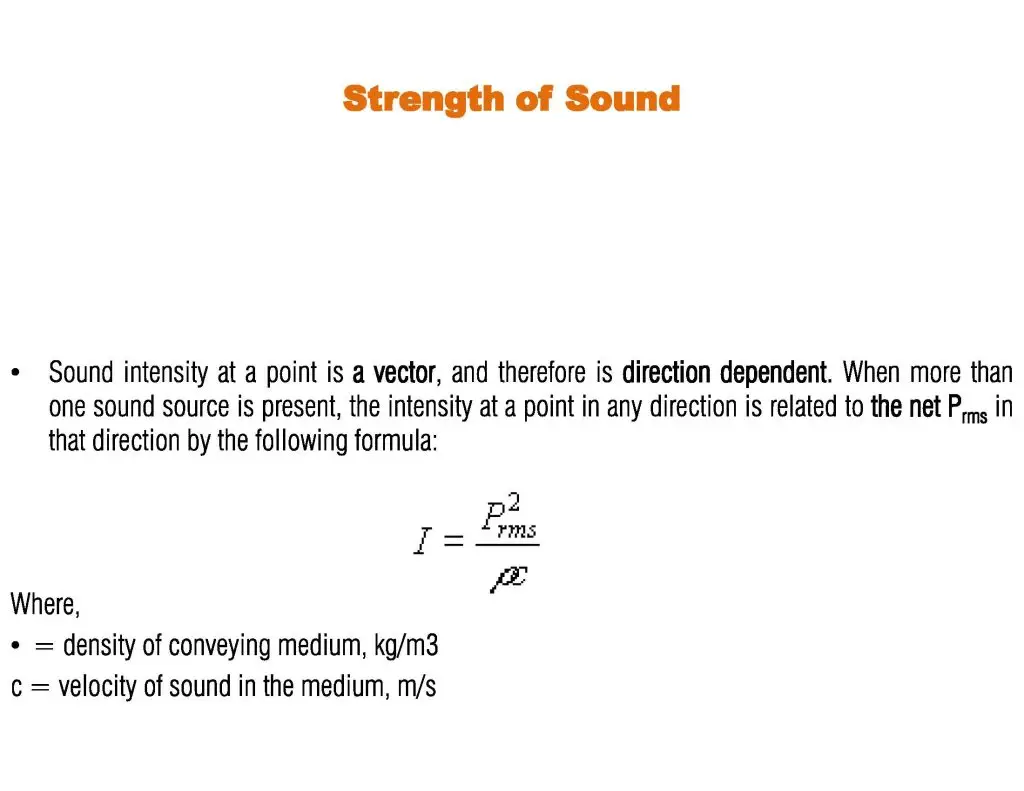
Sound intensity (I) is the sound power passing through a unit area perpendicular to the direction of propagation, measured in watts per square meter (W/m2). Intensity is related to pressure by the formula I = P²rms / (density x speed of sound), where density is the density of the medium in kg/m3.
The Decibel Scale
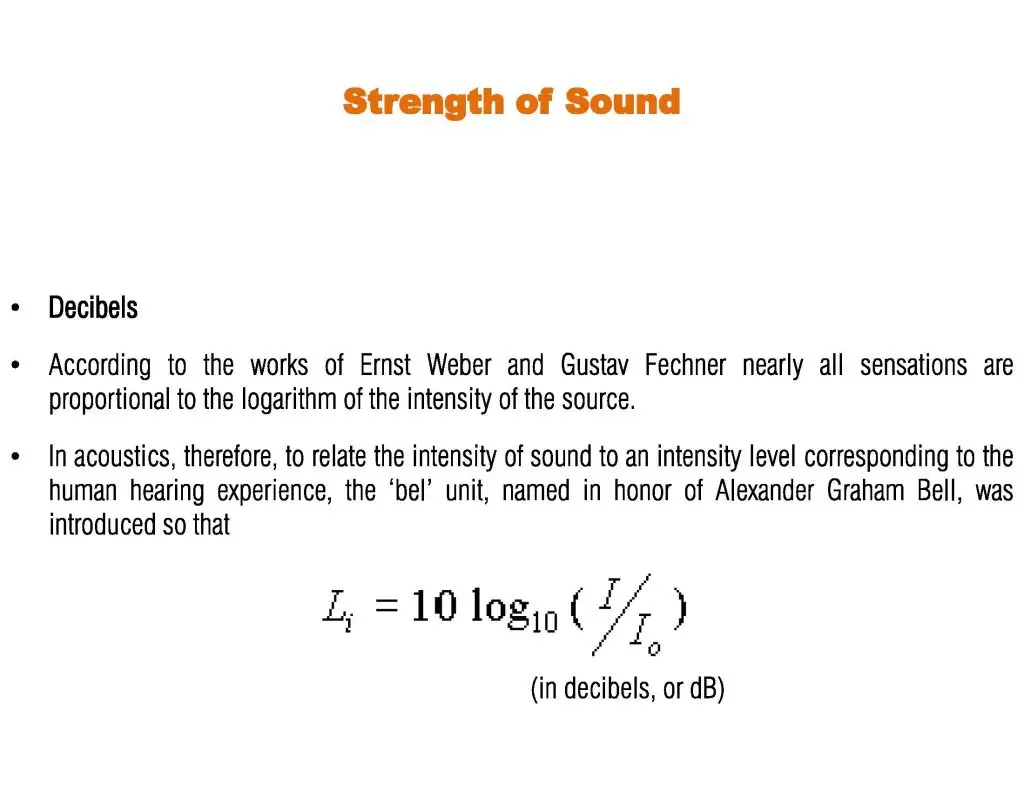
To manage the vast range of sound pressures and intensities encountered in practice, acousticians use the decibel (dB) scale — a logarithmic scale named in honor of Alexander Graham Bell. The intensity level in decibels is expressed as:
L_i = 10 log₁₀ (I / I₀)
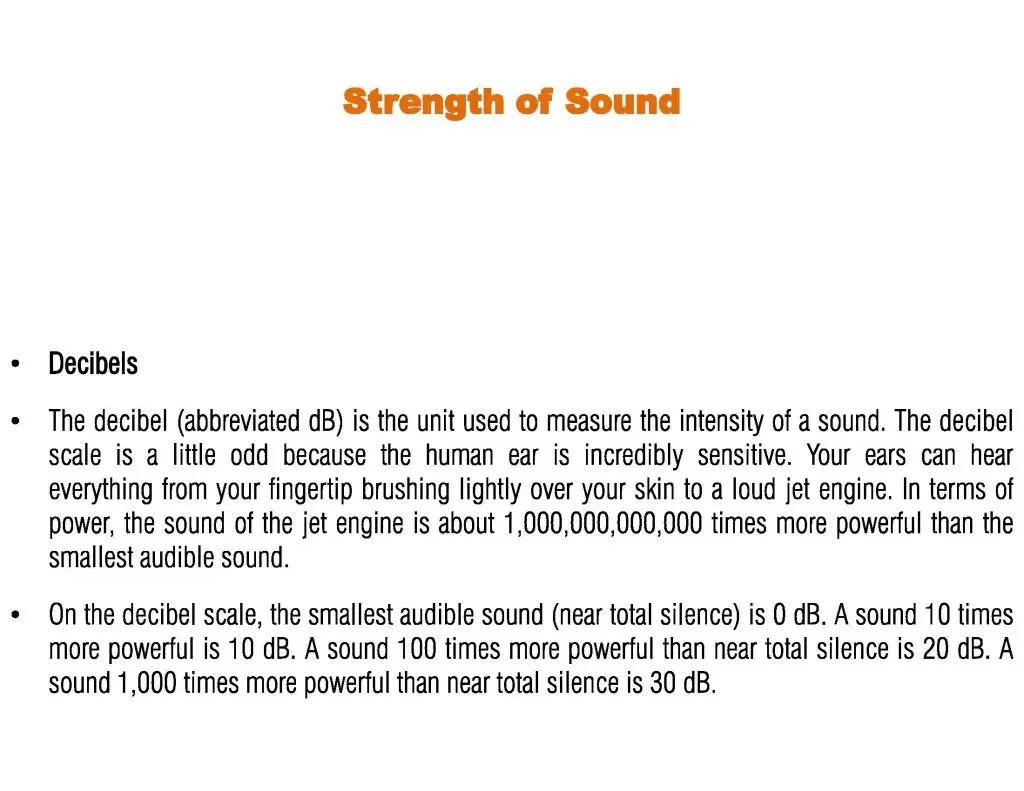
Where I₀ is the reference intensity of 10^-12 W/m2, which corresponds to the threshold of excellent youthful hearing. On this scale, near-total silence is 0 dB, and each increase of 10 dB represents a tenfold increase in acoustic intensity.
Sound pressure level (SPL) is expressed similarly as:
L_p = 20 log₁₀ (p / p₀)
Where p₀ = 2 x 10^-5 N/m2 (the reference pressure). The factor of 20 rather than 10 arises because intensity is proportional to the square of pressure.
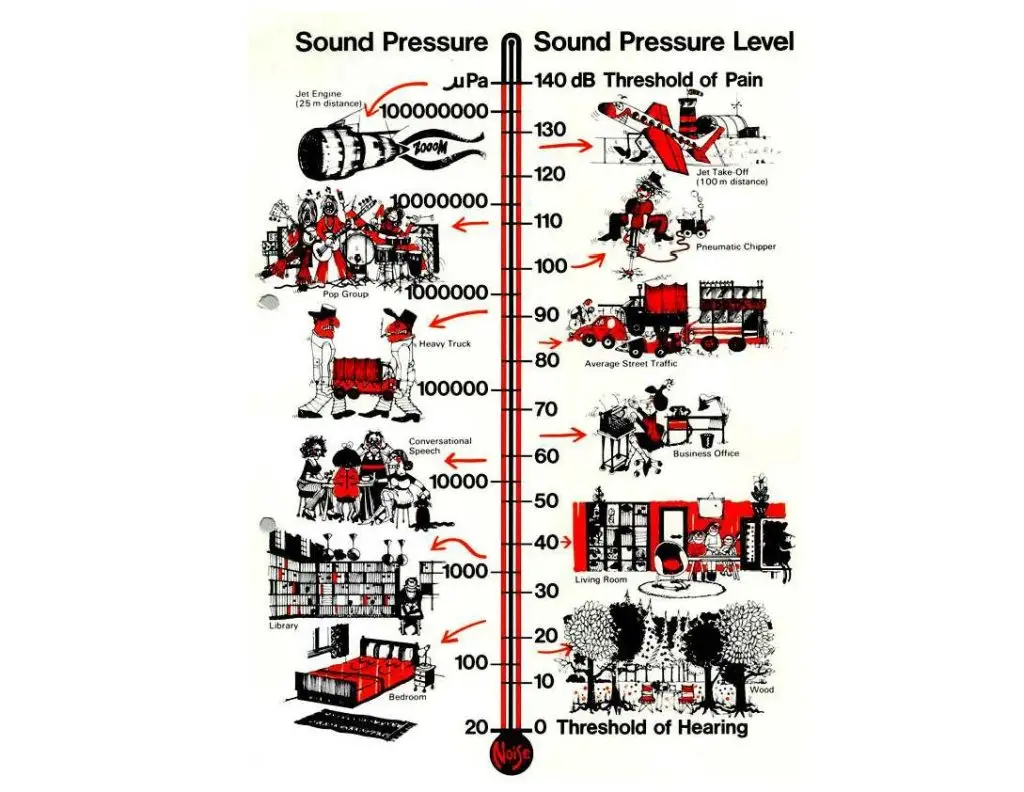
The following table shows typical sound pressure levels for common environments and sources, giving a practical sense of how the decibel scale maps onto everyday acoustical experience:
| Sound Source | Sound Pressure Level (dB) |
|---|---|
| Threshold of excellent youthful hearing | 0 |
| Normal breathing | 10 |
| Soft whisper | 30 |
| Mosquito buzzing | 40 |
| Average home interior, gentle rainfall | 50 |
| Ordinary conversation | 60 |
| Busy street | 70 |
| Power mower, car horn, fortissimo orchestra | 100 |
| Air hammer at 1 meter, threshold of pain | 120 |
| Rock concert | 130 |
| Jet engine at 30 meters | 150 |
| Rocket engine at 30 meters | 180 |
These figures are fundamental reference points for any architectural acoustics practitioner. They illustrate, for example, why a difference of just 10 dB between the ambient noise level of a room and the level of a desired sound signal can represent the difference between comfortable speech intelligibility and complete unintelligibility.


Why Architectural Acoustics Must Be Designed, Not Assumed
One of the most important insights in the study of architectural acoustics is that good acoustic environments do not arise by default. Every building generates its own unique set of acoustical parameters determined by its geometry, materials, mechanical systems, site context, and program. Noise from adjacent spaces, reverberation within rooms, the frequency response of surfaces, the transmission loss of partitions, and the behavioral patterns of occupants all interact to produce the acoustic environment that building users actually experience.
Understanding sound as a physical phenomenon — its wave nature, its speed in different media, its characteristics of pitch, quality, and loudness, and its measurable strength in decibels — is the essential first step toward being able to design that environment intentionally. Without this foundation, acoustic problems are discovered after construction and remedied at significant cost. With it, they are anticipated in design and resolved before a single wall is built.
Key Takeaways: Architectural Acoustics Fundamentals
- Architectural acoustics is the science of controlling sound within buildings to serve occupants’ needs, and good acoustic design must be intentional, not accidental.
- Sound is a longitudinal compression wave that travels through any medium — solid, liquid, or gas — but cannot travel through a vacuum.
- The speed of sound in air is approximately 344 m/s; in denser structural materials such as concrete and steel, it travels significantly faster.
- Wavelength is the physical distance between successive wave peaks; frequency is the number of cycles per second (Hz); the two are inversely related through the speed of sound.
- Human hearing spans approximately 20 Hz to 20,000 Hz; the critical range for speech intelligibility is 300 to 4,000 Hz.
- Sound is analyzed across standardized octave bands, with center frequencies from 16 Hz to 16,000 Hz, rather than frequency-by-frequency.
- Sound can be characterized perceptually by pitch (frequency), quality (harmonic structure), and loudness (subjective response to pressure).
- The decibel scale is a logarithmic scale used to express sound pressure level (SPL) and sound intensity level (IL), with a reference pressure of 2 x 10^-5 N/m2.
- Ordinary conversation registers at approximately 60 dB SPL; the threshold of pain is approximately 120 dB SPL.
Frequently Asked Questions About Architectural Acoustics
What is architectural acoustics?
Architectural acoustics is the branch of applied science that deals with controlling and shaping the behavior of sound within and around buildings to meet specific performance criteria for occupants, including speech intelligibility, music quality, and noise control.
Why is architectural acoustics important in building design?
Poor acoustic design can reduce speech intelligibility, lower productivity, cause hearing fatigue, reduce the market value of residential spaces, and make performance spaces unusable. Good acoustic design must be built in from the earliest stages of a project.
What is the difference between sound pressure level and sound intensity level?
Sound pressure level (SPL) is measured in decibels and expressed as 20 log₁₀ (p/p₀), while sound intensity level (IL) is expressed as 10 log₁₀ (I/I₀). Both use logarithmic scales to manage the enormous range of values encountered in practice, and both use the threshold of human hearing as the reference value.
What frequency range is most important for speech intelligibility?
The critical frequency range for speech communication is considered to be 300 to 4,000 Hz. While fundamental speech frequencies fall between about 100 and 600 Hz, the consonants and articulation that carry the most information are concentrated in the upper part of this range.
What is an octave band and why is it used in architectural acoustics?
An octave band is a standardized frequency range in which the upper limit is twice the lower limit. Octave bands are used because analyzing sound on a frequency-by-frequency basis would be impractical. The standard center frequencies are 16, 31.5, 63, 125, 250, 500, 1,000, 2,000, 4,000, 8,000, and 16,000 Hz.
What is the decibel scale and why is it used?
The decibel scale is a logarithmic measurement scale used to express the magnitude of sound because the range of sound pressures audible to humans spans approximately one million to one — too large to express conveniently on a linear scale. On the decibel scale, each 10 dB increase represents a tenfold increase in acoustic intensity.
What is the difference between airborne and structure-borne sound in buildings?
Airborne sound travels through the air as pressure waves, with a medium of air as the transmission path. Structure-borne sound travels through the physical fabric of a building — floors, walls, columns — and is caused by direct mechanical contact such as footfall, impact, or vibrating machinery. Both must be addressed in a comprehensive acoustical design strategy.
What is the speed of sound in air?
At sea level, sound travels through air at approximately 344 meters per second (1,130 feet per second). This value is suitable for most architectural acoustics calculations within a 3 percent margin of error.
Conclusion
Architectural acoustics is an indispensable component of informed, responsible building design. From the physics of sound waves and the logarithmic structure of the decibel scale to the frequency bands that determine speech intelligibility and the speed of sound through structural materials, the basics of acoustics provide the essential framework within which all acoustic design decisions are made.
Every building is, whether its designers acknowledge it or not, an acoustic instrument — one that shapes the sound environment of every person within it. Understanding the foundational principles of architectural acoustics is the first step toward designing that instrument with intention, skill, and genuine care for the people who will inhabit the result.
Related Architecture Projects You Might Like
- Alcacer do Sal Residences — Aires Mateus, Portugal 2010
- The Glass House Theater Snohetta — Brisbane QPAC 2026
- The Grand Ring — Expo Osaka 2025 and the Timber Afterlife
- All Architecture Projects — Architecture as Aesthetics
Sources and Credits: This article is based on information from the following verified publications: ArchDaily (Antonia Pineiro, 15 May 2025, archdaily.com/1030145); Dezeen (20 May 2025, dezeen.com); Domus Web (15 May 2025, domusweb.it); Designboom (26 November 2024, designboom.com); the official Fenix press release (press.fenix.nl); Arts Queensland (arts.qld.gov.au); MAD Architects official project page (i-mad.com); Finestre sull’Arte (finestresullarte.info); World Architecture (worldarchitecture.org); Metalocus; and Parametric Architecture. Photography by Iwan Baan and Iris van den Broek unless otherwise stated. This article is published for educational and informational purposes only. All facts have been sourced from and cross-referenced against the above verified publications. Fenix Migration Museum.
If you found the sustainable engineering and circular design of Fenix Migration Museum, there is so much more to discover. Explore our full portfolio of architectural and interior design projects, where we consistently push the boundaries of spatial innovation, modern functionality, and sustainable aesthetics. Whether you are looking for contemporary urban layouts, efficient residential spaces, or cutting-edge commercial concepts, our diverse portfolio shows we turn visionary design into reality. [Click here to visit our portfolio and discover your next design inspiration!]