

There are buildings that shelter. There are buildings that impress. And then there are buildings that make you stop — that pull something quiet and unnameable out of you before you have even entered. Tadao Ando’s Church on Water in Hokkaido, Japan, belongs entirely to that last category. Designed in 1985 and completed in 1988, the Church on Water is not merely one of the most admired sacred buildings of the twentieth century. It is one of the most honest buildings ever made — a structure that refuses ornamentation and instead places its entire spiritual weight on the simplest elements available to any architect: water, concrete, light, and the changing face of nature.
The Church on Water played a decisive role in Tadao Ando receiving the 1995 Pritzker Architecture Prize — the highest honour in architecture — prominently featured in his submission portfolio as evidence of his ability to create introspective, nature-infused sacred spaces of international significance.
This post examines everything essential about the Church on Water — its origins, geometry, spatial sequence, material philosophy, seasonal transformation, and its enduring global influence.

What Is the Church on Water?
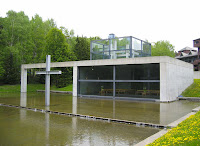
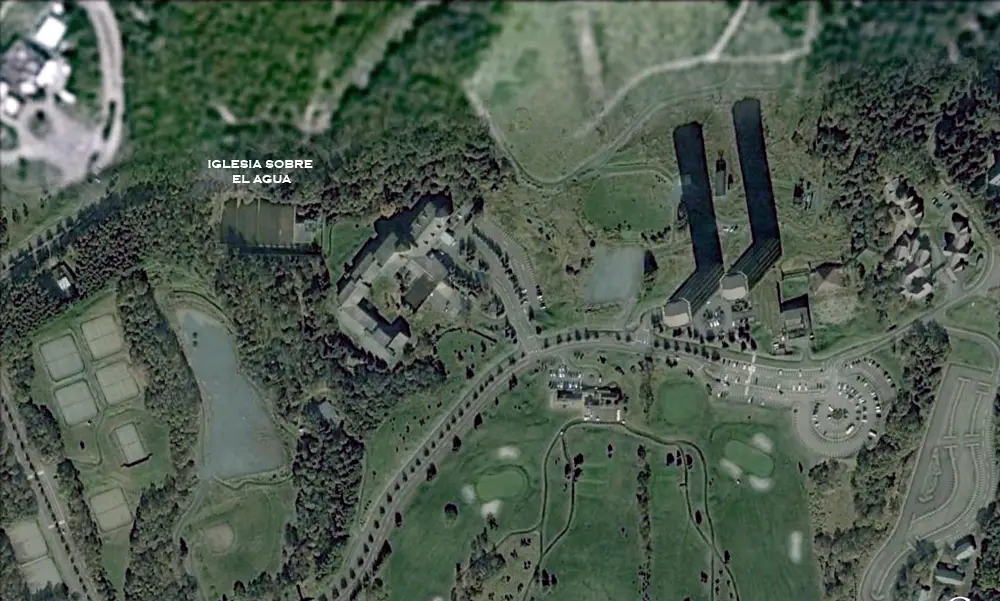
The Church on Water, known in Japanese as Mizu no Kyokai (水の教会), is a minimalist chapel located in Nakatomamu, Shimukappu, Yufutsu District, Hokkaido, Japan. It is part of the Hoshino Resorts Tomamu complex — known previously as the Alpha Resort Tomamu — but exists in deliberate spatial separation from it, screened by an L-shaped concrete wall.
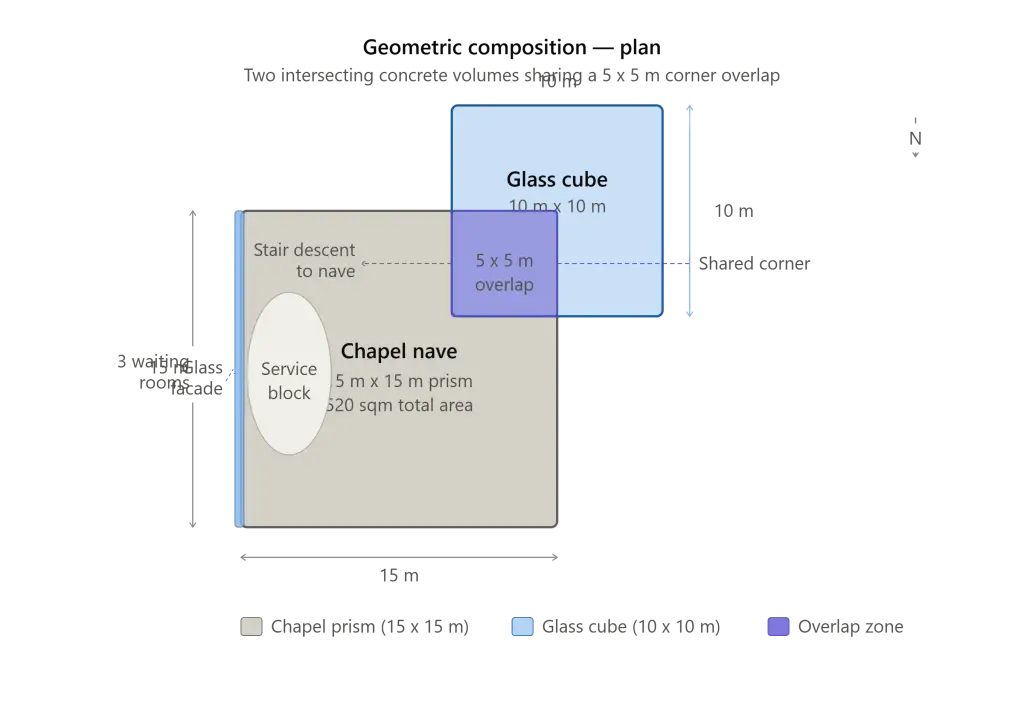
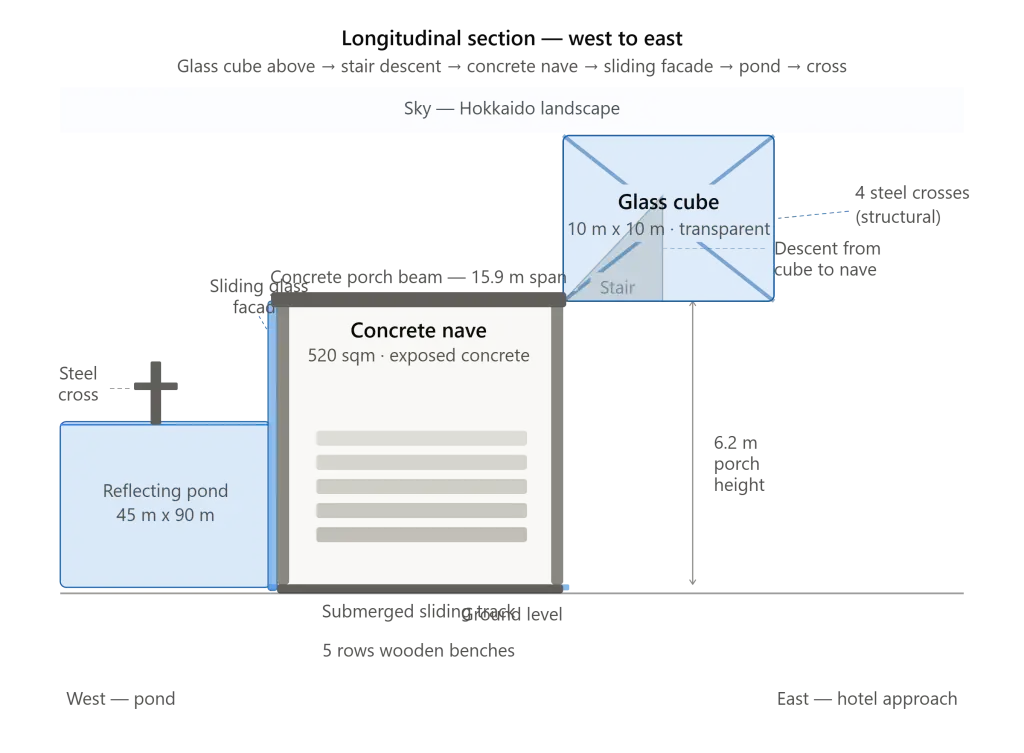
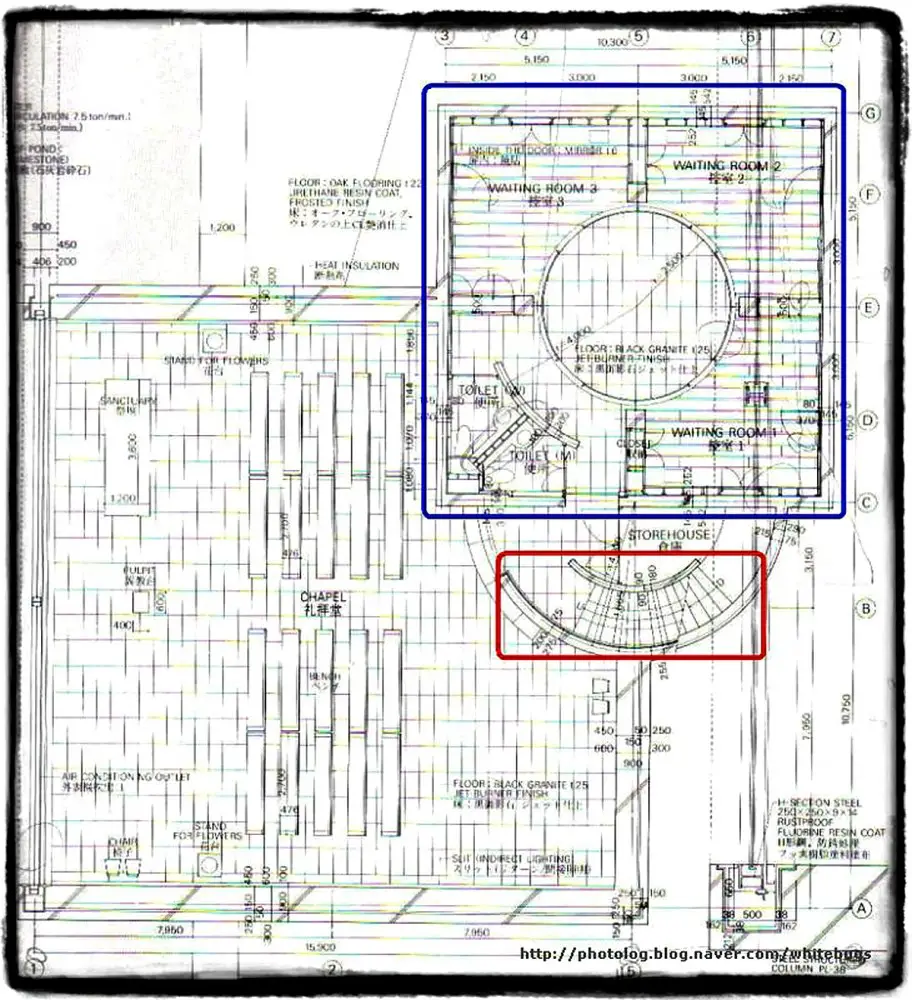
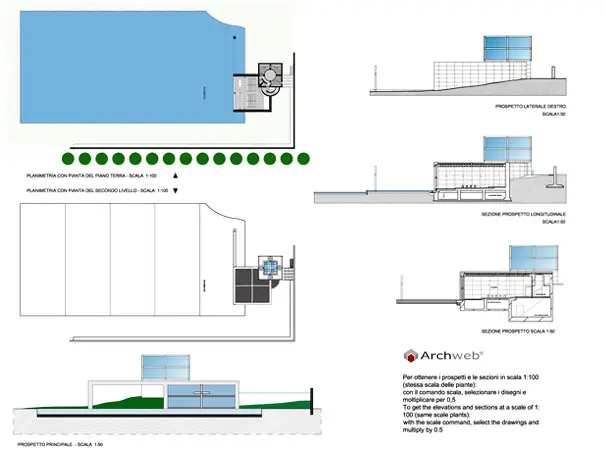
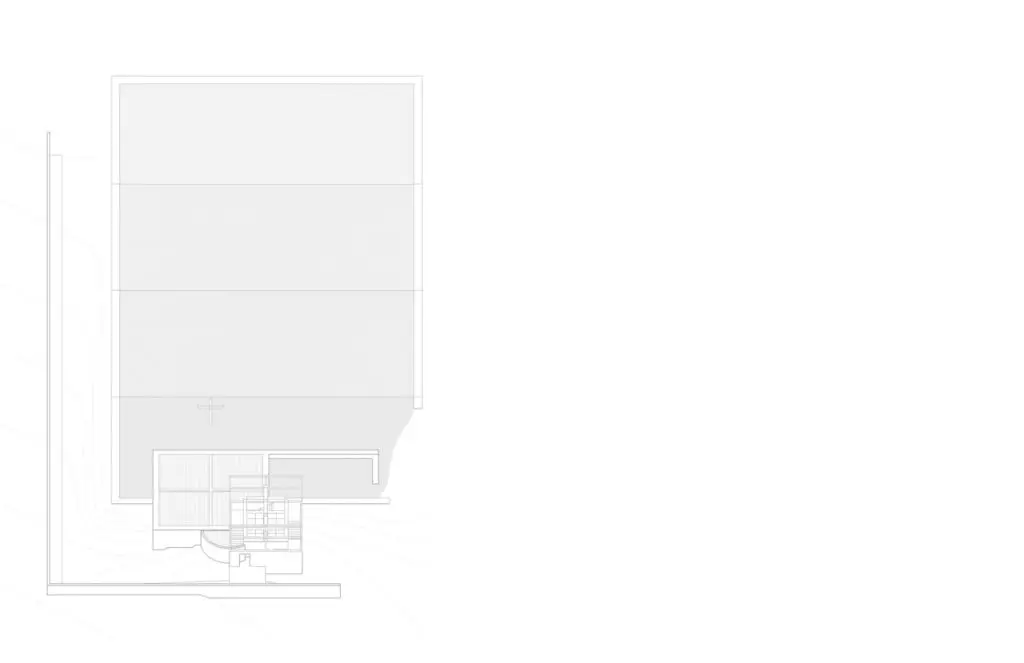
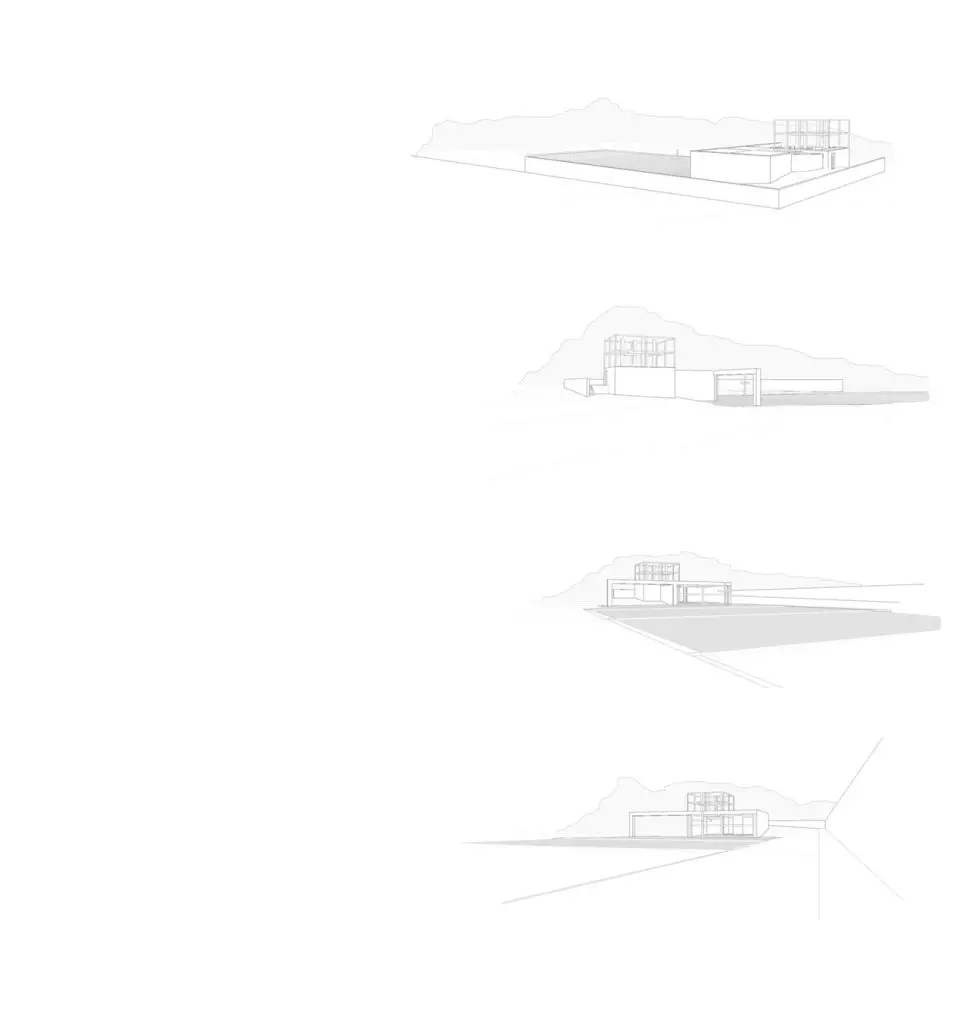
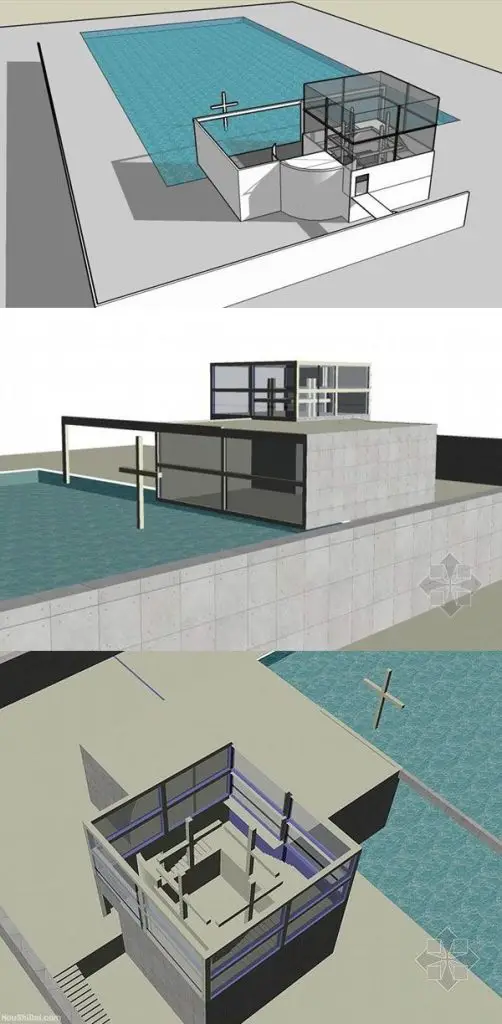
The Church on Water covers 520 square meters. The building consists of two intersecting concrete volumes — a larger prism with a square base of 15 meters per side housing the chapel, and a smaller cube of 10 meters per side serving as the glass entrance pavilion — sharing a corner across an overlap zone of 5 by 5 meters. In front of the chapel sits a man-made rectangular reflecting pond measuring 45 by 90 meters, divided into four stepped 15-meter platforms descending toward a natural river at the edge of the site.
At the center of that pond stands a steel cross — positioned outside the building, not inside it. A full-height operable glass wall faces the pond directly, and in favorable weather it slides completely open, dissolving every boundary between interior and exterior. The Church on Water is privately owned and functions as a wedding chapel. Admission is free but entry is managed in timed batches, with visiting hours at 6:30–7:30 and 20:30–21:20. The official website is waterchapel.jp.
1. Origins: From the Sea at Kobe to the Forests of Hokkaido
The story of the Church on Water begins not in Hokkaido but on the coast of Kobe, where Ando originally conceived the project in 1985 as a chapel facing the open Pacific — a meditation on the contrast between solid concrete structure and boundless fluid expanse. That original commission never reached construction.
When a landowner associated with the Alpha Resort Tomamu encountered the project, he recognized something essential in its premise and relocated the concept inland. The sea was replaced by a constructed reflecting pond. The vastness of the ocean became the intimacy of still, contained water in a forest clearing in a beech grove sloping toward a small natural river. Far from diminishing the project’s spiritual intensity, the change of site deepened it. The pond’s mirror surface carries a quality the open sea could never provide — a still reflection of sky, trees, cross, and the changing Hokkaido seasons that amplifies the contemplative atmosphere of the Church on Water with a precision impossible outdoors.
Tadao Ando himself stated his philosophy clearly: “You can’t just put something new in a place. You have to absorb what you see around you, what exists on earth, and then use that knowledge along with contemporary thinking to interpret what you see.” The Church on Water is the fullest expression of that belief.

2. The L-Shaped Wall: Separation as Sacred Architecture
Before you enter the Church on Water, Tadao Ando makes you understand spatially what you are about to leave behind. The L-shaped concrete wall — two arms measuring 39 meters and 75 meters oriented east and south — is not a decorative gesture. It is architecture performing theology.
The wall separates the hotel complex from the chapel precinct with absolute clarity. Walking along it, the visitor can hear the sound of a waterfall created by the staggered pond before the pond itself is visible. Ando created this effect deliberately — the sound arrives before the sight, calibrating the senses to what is coming. When the pond finally appears, framed by raw concrete and glass, it arrives not as a backdrop but as the essence of the sacred itself.
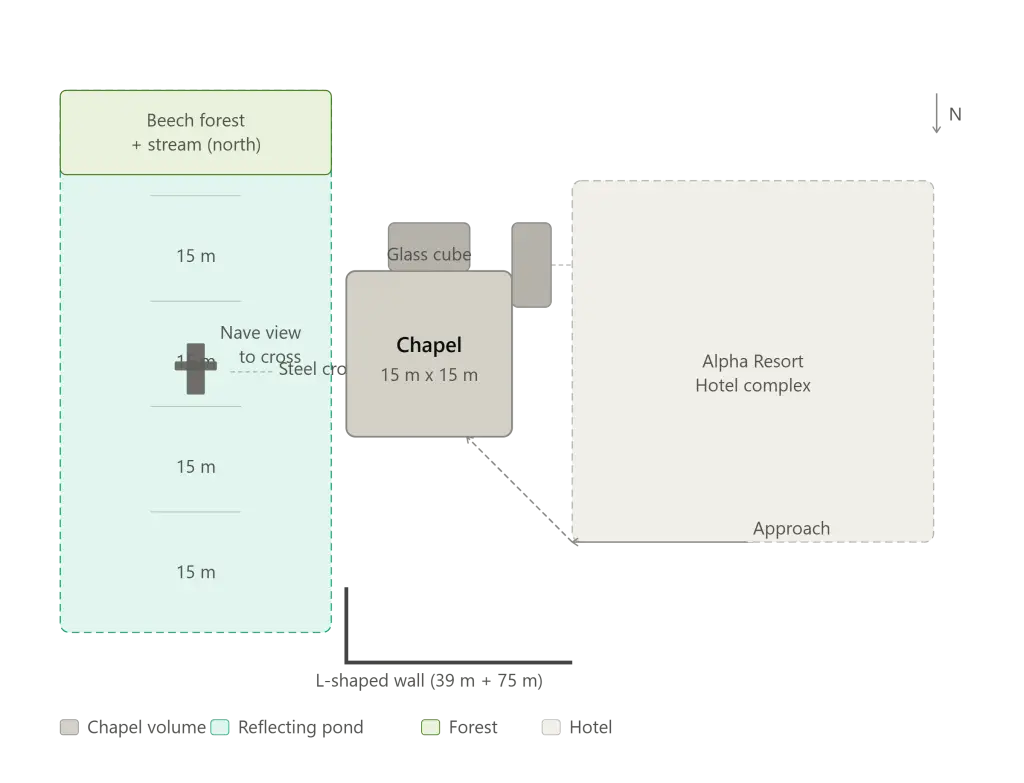
The wall also screens the resort hotel entirely from view once you enter the chapel precinct, making it possible to stand in a building attached to a commercial resort and feel completely alone with sky, water, concrete, and forest. This is the oldest function of sacred architecture — the making of a threshold — achieved without any reference to historical ecclesiastical form.
For students of contemporary religious architecture, the L-shaped wall of the Church on Water is one of the most complete demonstrations of how architecture can create sacred separation through pure geometry alone.
3. The Glass Cube, Four Crosses, and the Descent Into the Nave
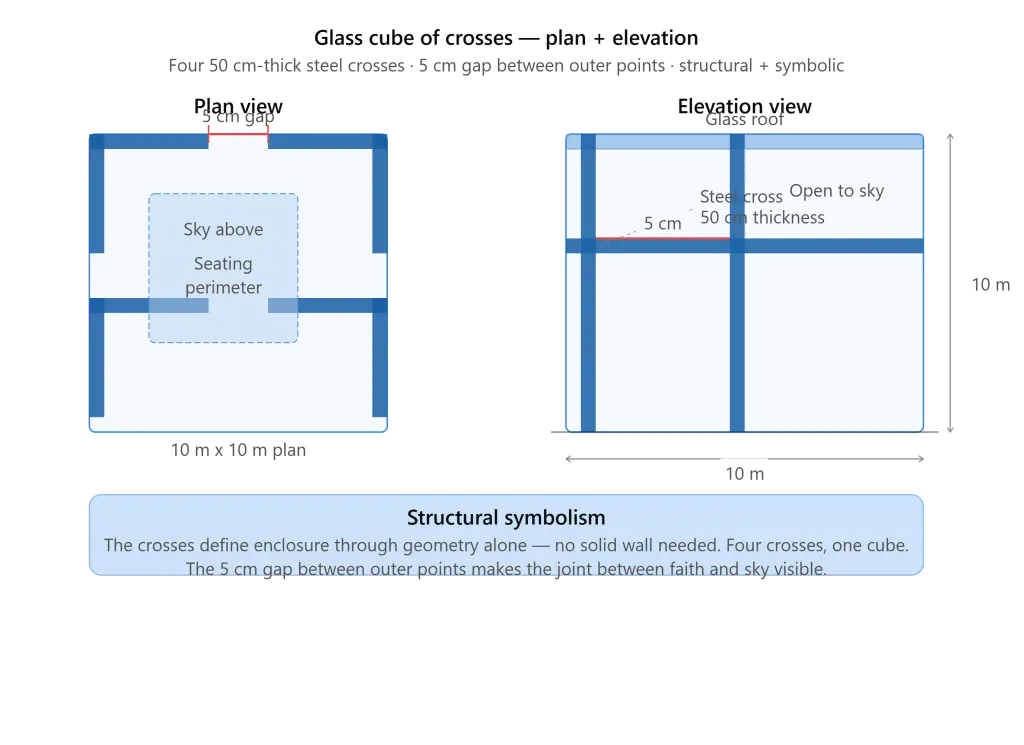
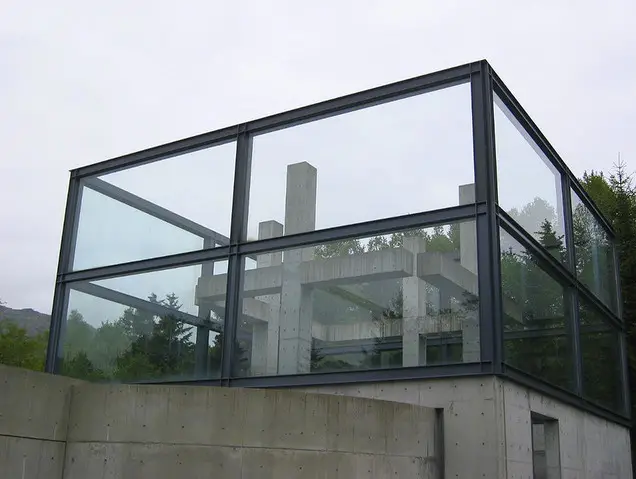
The visitor’s path into the Church on Water does not go directly to the chapel. First, you ascend to an upper-level glass cube — a transparent pavilion defined by four large steel crosses arranged so that their outer points are separated by just 5 centimeters, creating a virtual enclosure through the geometry of the cross rather than through solid walls.
Within this glass cube, seats are arranged along the perimeter. This is not the main chapel. It is a forecourt — a spatial introduction, a place to pause before descending. From this glass cube, the visitor descends via a semi-circular spiral staircase into the concrete chapel below, a transition that architectural observers have described as a journey from transparency to enclosure, from open sky to directed view, from the plural beauty of the landscape to the singular intensity of the cross on the water.
The concrete walls of the Church on Water are 900 millimeters — 90 centimeters — thick, incorporating thermal insulation to withstand Hokkaido’s harsh winters. This is a pragmatic dimension that carries spiritual weight: the thickness of the wall makes the transition from outside to inside a physical experience, not merely a visual one. You feel the separation.
4. The Interior: Nature as the Living Altar
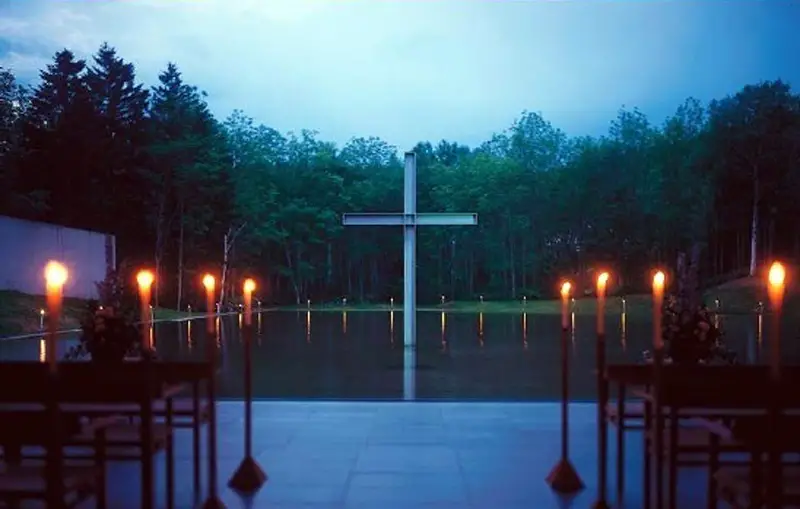
The interior of the Church on Water is one of the most radically bare sacred interiors in modern architecture. Five rows of simple wooden chairs. Exposed reinforced concrete walls with controlled fenestration admitting light in a pattern characteristic of Ando’s broader work. No paintings, no sculpture, no gilding, no colored glass.
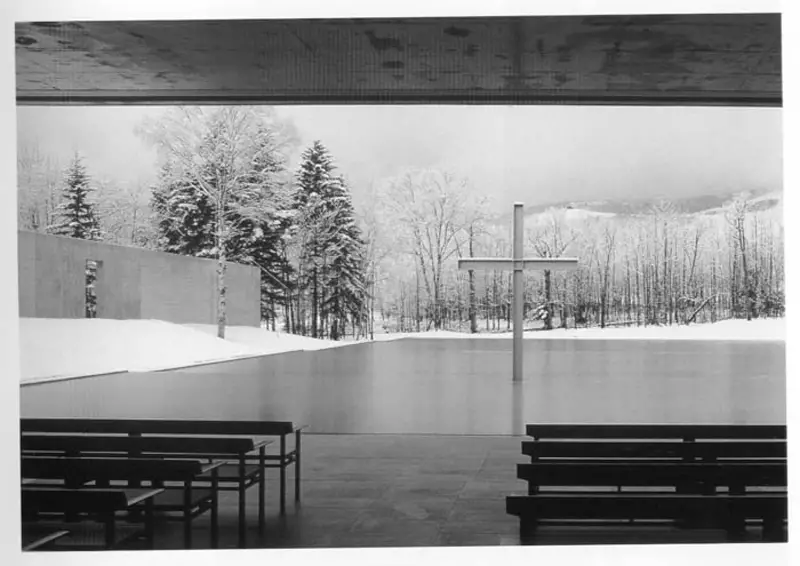
What the Church on Water has instead — the thing that makes it extraordinary — is its front wall. In place of the altar image or devotional icon that would occupy the focal wall of a conventional Christian chapel, Ando substituted a full-height glass facade opening directly onto the reflecting pond, the steel cross, and the beech forest and mountains beyond.
In the Japanese architectural tradition of shakkei (借景) — “borrowed scenery” — the designer frames a view of the landscape beyond the building’s boundaries so that the external landscape becomes part of the interior spatial experience. In the Church on Water, Ando takes shakkei to its absolute limit. The borrowed scenery is not supplementary to the sacred space. It is the sacred space. The view through the glass is the altarpiece. The cross in the water is the devotional focus — but it is a cross positioned in the living landscape, not fixed to a wall, not removed from the world.

The steel cross appears to float on the water’s surface, suspended between sky and earth. When the full-height glass facade slides open in warm weather — with its track submerged below the pond’s edge so that the water surface appears continuous and unbroken — the cross seems to exist simply in the world, reachable, present, unbounded.
The view from inside the Church on Water changes with every season: spring’s renewal, summer’s intense green, autumn’s amber and gold, winter’s white erasure. This is architecture as a living altarpiece — a representation of the sacred that cannot be fixed or framed, that demands a different contemplative response in every month of the year.
For a compelling contrast — an approach to sacred space that prioritizes constructed light over borrowed landscape — the Jubilee Church analysis on Architecture Associate shows how Richard Meier’s Roman chapel arrives at a comparable spiritual intensity through opposite means.

5. Shakkei, Itsukushima, and the Philosophical Framework
Understanding the Church on Water requires understanding the dual intellectual tradition — Japanese and Western — from which it emerges. Tadao Ando is famously self-taught. He never attended architecture school, educating himself through travel and extensive reading.
The most important Japanese cultural precedent for the Church on Water is the Itsukushima Shrine at Miyajima, near Hiroshima — one of the three most celebrated scenic views in Japan — where a torii gate stands in the middle of the sea. The cultural resonance of a sacred object appearing to rise from water rather than from land runs deep in Japanese tradition. Ando translates this resonance into the vocabulary of twentieth-century modernism with the steel cross in the pond of the Church on Water.
The most immediate Western precedent is the Chapel of the Helsinki University of Technology at Otaniemi, Finland, designed in 1957 by Kaija and Heikki Siren — a chapel that opens directly to a forest through a large glass wall, making nature the sacred focus. Ando acknowledged this chapel directly and developed its premise further in the Church on Water by adding the reflecting pond, the cross, and the operable glass facade.
Ando’s concrete walls are also a philosophical statement. He described reinforced concrete as his “chosen medium for its purity and honesty.” The 900-millimeter walls of the Church on Water are not merely structural or thermal — they are a materialization of the belief that restraint produces spiritual richness. As Ando stated: “I don’t believe architecture has to speak too much. It should remain silent and let nature in the guise of sunlight and wind speak.”
This is the philosophical core of the Church on Water: architecture as threshold, not as monument. The building does not proclaim itself. It creates conditions. And then it steps aside.
For a companion study of how another architect used similar minimalist discipline in a meditative spiritual context, the Meditation Space post on Architecture Associate offers a parallel reading.
6. Legacy and Global Influence
The Church on Water received widespread international coverage in The Japan Architect during the late 1980s and early 1990s, which emphasized its symbolic power and spatial poetry. It became one of the anchor works in Tadao Ando’s Pritzker Prize submission in 1995. It is now standard in architecture school curricula worldwide and is among the most photographed sacred buildings of the modern era.
Its influence on subsequent sacred and contemplative architecture has been substantial. The idea of using a glass facade to make the landscape the altar image — and of placing the sacred object in the landscape rather than inside the building — has been explored by dozens of architects since 1988. The Church on Water introduced the concept with a precision and restraint that has rarely been equalled.
The Church on Water also endures as one of the most powerful arguments for self-taught architecture. Ando’s formal education was zero. The building in Tomamu is the product of a mind trained not by curriculum but by looking, reading, and thinking with extraordinary seriousness about what architecture is for.



Key Facts: Church on Water at a Glance
| Feature | Detail |
|---|---|
| Japanese Name | Mizu no Kyokai (水の教会) |
| Architect | Tadao Ando Architect and Associates |
| Location | Nakatomamu, Shimukappu, Hokkaido, Japan |
| GPS Coordinates | 43.06374°N, 142.62618°E |
| Design Year | 1985 (original Kobe concept) |
| Completion Year | 1988 |
| Floor Area | 520 square meters |
| Geometry | 15 m x 15 m prism + 10 m cube, 5 x 5 m overlap |
| Pond Dimensions | 45 m x 90 m (four 15 m stepped platforms) |
| Concrete Wall Thickness | 900 mm (with thermal insulation) |
| Cross | Steel, positioned in the center of the pond |
| Facade | Full-height sliding glass, track submerged below pond |
| Seating | Five rows of wooden chairs |
| Building Type | Wedding chapel (Hoshino Resorts Tomamu) |
| Visiting Hours | 6:30–7:30 and 20:30–21:20 (free admission) |
| Official Site | waterchapel.jp |
Citation-Worthy Data Points
- The Church on Water was prominently featured in Tadao Ando’s 1995 Pritzker Architecture Prize submission portfolio — Grokipedia / The Japan Architect records
- The Church on Water concrete walls are 900 mm thick with integrated thermal insulation — ArchEyes / RTF research data
- The reflecting pond of the Church on Water measures 45 m x 90 m, divided into four 15-meter stepped platforms — Tadao Ando Architect and Associates project documentation
- The operable glass facade track is submerged below the water surface to maintain visual continuity of the pond — Rethinking the Future analysis
- The Chapel of the Helsinki University of Technology at Otaniemi (Kaija and Heikki Siren, 1957) is the acknowledged direct Western precedent for the Church on Water — Architectural Moleskine / Architecture Associate source documentation
- The Itsukushima Shrine at Miyajima is one of the three most celebrated scenic views in Japan and the cultural precedent for a sacred object positioned in water — Japanese cultural canon
Frequently Asked Questions About the Church on Water
What is the Church on Water?
The Church on Water, or Mizu no Kyokai (水の教会), is a minimalist Japanese wedding chapel designed by architect Tadao Ando and completed in 1988 in Nakatomamu, Shimukappu, Hokkaido, Japan. It is part of the Hoshino Resorts Tomamu complex. The Church on Water is internationally recognized for its full-height glass facade that opens onto a 45 x 90 meter reflecting pond, in the center of which stands a steel cross. It is one of the most studied works of contemporary sacred architecture in the world.
Who designed the Church on Water?
The Church on Water was designed by Tadao Ando of Tadao Ando Architect and Associates. Ando is a self-taught Japanese architect who received the Pritzker Architecture Prize in 1995 — the highest honor in world architecture — partly on the strength of the Church on Water and related works. He is known internationally for his signature use of exposed reinforced concrete, natural light, and deep engagement with the natural landscape.
Where is the Church on Water located?
The Church on Water is located in Nakatomamu, Shimukappu, Yufutsu District, Hokkaido Prefecture, Japan (GPS: 43.06374°N, 142.62618°E). The official address is Nakatomamu, Shimukappu, Yufutsu District, Hokkaido 079-2204, Japan. The phone number is +81 50-5845-5418 and the official website is waterchapel.jp. The Church on Water is accessible by minibus from the Hoshino Resorts Tomamu main complex.
Why is the cross of the Church on Water placed in the pond, not inside the chapel?
Tadao Ando deliberately placed the steel cross of the Church on Water in the reflecting pond outside the building rather than on an interior wall. This decision removes the cross from the enclosure and places it in the living landscape, making it appear to float on the water between sky and earth. The effect — particularly when the glass facade slides fully open — is that the cross exists in the world as a presence rather than as a symbol on a wall. Ando drew on the Japanese cultural tradition of the Itsukushima Shrine at Miyajima, where a sacred torii gate stands in the middle of the sea, to inform this design decision.
What is shakkei and how does it apply to the Church on Water?
Shakkei (借景) is the Japanese design concept of “borrowed scenery” — the practice of deliberately framing a view of the landscape beyond a building’s boundary so that the external landscape becomes an integral part of the interior spatial experience. In the Church on Water, Ando applies shakkei to its architectural limit: the beech forest, the mountains, the pond, and the cross are not viewed as background scenery through a window but are the primary sacred content of the space. The full-height glass facade, when open, makes the interior of the Church on Water and the exterior landscape a single continuous experience.
What are the concrete walls of the Church on Water made of?
The concrete walls of the Church on Water are reinforced concrete with a thickness of 900 millimeters — approximately 35 inches. This substantial thickness serves two purposes: structural and thermal. Hokkaido’s winters are extremely harsh, and the thick walls with integrated thermal insulation protect the interior from the severe cold while simultaneously providing the quality of material weight and enclosure that Tadao Ando regards as philosophically essential. Ando has described reinforced concrete as his chosen medium for its purity and honesty.
Is the Church on Water open to the public?
Yes. The Church on Water is open to visitors as part of the Hoshino Resorts Tomamu complex. Admission is free, but entry is managed in timed batches to preserve the contemplative atmosphere. Visiting hours are 6:30–7:30 (morning) and 20:30–21:20 (evening). Visitors are encouraged to sit and remain in the space rather than rush through. The Church on Water also functions as an active wedding chapel.
How does the Church on Water change between seasons?
The Church on Water presents a genuinely different sacred experience in every season of the Hokkaido year. In spring, the beech forest erupts with renewal and the glass facade slides open. In summer, the view through the glass is an immersive deep green. In autumn, the beech trees flame with amber and gold. In winter, the landscape retreats to white silence, the bare trees stand stark against the snow, and the cross in the frozen pond appears with maximum graphic intensity. This seasonal transformation is not incidental — it is the design. The Church on Water treats the changing natural world as its living altarpiece.
Related Posts from Architecture Associate
- Jubilee Church: 7 Brilliant Secrets of Richard Meier’s Daring Masterpiece
- Meditation Space — Sacred Architecture and the Language of Stillness
- Knut Hamsun Centre — Steven Holl’s Poetic Architecture in Norway
- Villa Savoye (1931): Le Corbusier’s Brilliant Modernist Masterpiece in Poissy
- Villanueva Public Library: 5 Powerful Design Secrets Behind Colombia’s Most Inspiring Community Landmark
External References
- ArchEyes — Church on Water full analysis: archeyes.com
- MoMA Collection — Tadao Ando original drawings: moma.org
- Rethinking the Future — shakkei analysis: re-thinkingthefuture.com
- Wikipedia — Church on the Water: en.wikipedia.org
Final Thoughts
The Church on Water Tadao Ando built in the forests of Hokkaido between 1985 and 1988 is not a complicated building. It is two concrete volumes, a glass wall, a steel cross in a pond, and five rows of wooden chairs. What makes the Church on Water one of the great buildings of the twentieth century is precisely that simplicity — the rigour with which every element was considered, the discipline with which every unnecessary thing was refused, and the clarity with which the whole composition asks its central question: what does it mean for a human being to stand before the natural world and feel the presence of something beyond the human?
Ando answered that question with concrete walls, a sheet of still water, and the changing face of a Hokkaido forest across four seasons. That the Church on Water makes the question feel answered — at least for the duration of the visit — is the full measure of its achievement.
Whether you visit as a believer, as a student of architecture, or simply as someone who cares about what spaces can do to the quality of human attention, the Church on Water in Tomamu belongs on the list of places you must experience before you form an opinion about what architecture can become.
Explore more landmark spiritual architecture and contemporary design analysis at Architecture Associate — Spiritual Center.