

Quick Facts
| Detail | Information |
|---|---|
| Studio Name | Pure + FreeForm |
| Type | Architectural Metal Design Studio |
| Headquarters | St. Paul, Minnesota, USA |
| Specialization | Bespoke metal finishes and cladding products |
| Core Material | Ultra High-Performance Aluminum |
| Signature Coating | FEVE Lumiflon resin |
| Sustainability | VOC Free, Red List Free, HPD, LEED qualified, 100% recyclable |
| Recycled Content | Minimum 20% post-consumer recycled aluminum |
| Key Collections | Specular, MetaMetal, Alloy, Contextual Coatings |
| Production Capacity | Up to 100,000 square feet per day |
| Notable Collaborators | KPF, Kengo Kuma and Associates, Rafael Viñoly, GWWO Architects, HGA, Roger Ferris + Partners |
| Compliance Standards | AAMA 2605, ASTM E84, ASTM D4145, ASTM D522, Class A Fire Rating |
Introduction: When Metal Becomes Meaning
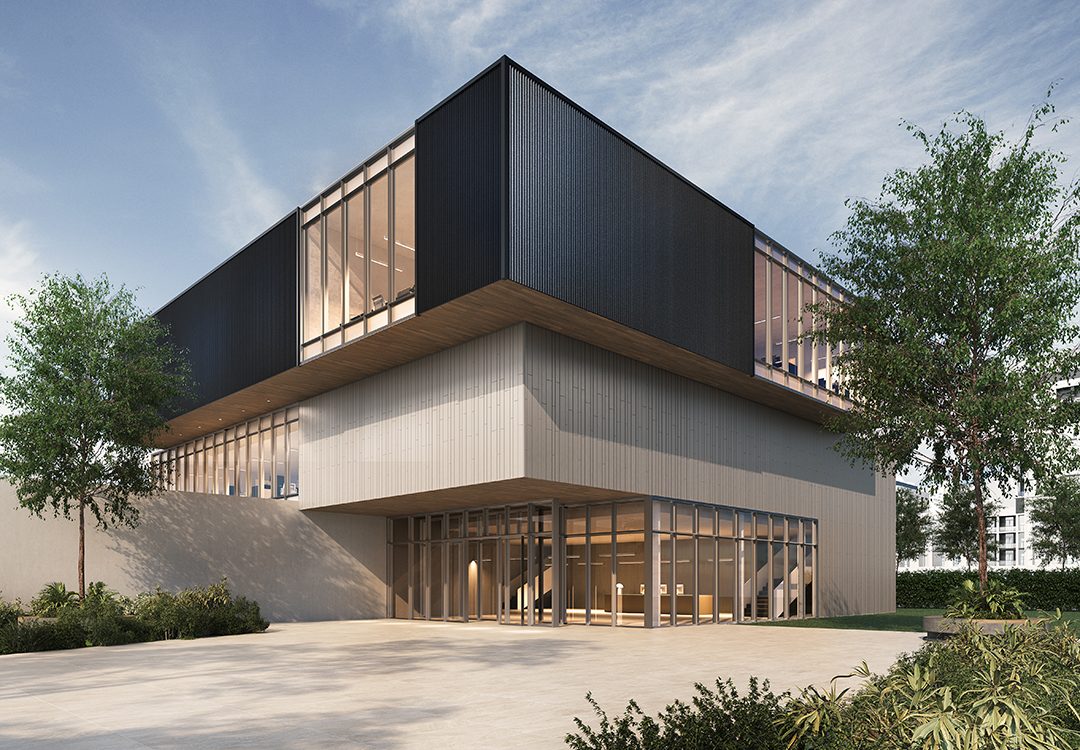
Most people think of metal cladding as a technical decision — a specification made late in the design process to satisfy waterproofing requirements, budget constraints, or maintenance schedules. Pure FreeForm has spent its entire existence arguing against that assumption. Based in St. Paul, Minnesota, Pure FreeForm is an architectural metal design studio that approaches cladding not as a technical afterthought but as the primary vehicle through which a building’s relationship to its site, its community, and its culture is expressed.
The core philosophy of Pure FreeForm is stated with unusual clarity on the studio’s own materials: they believe in materials that reflect tradition, texture, scale, purpose and place, not just simple beauty. What matters to Pure FreeForm is a project’s relationship to its surroundings — offering something tangible and meaningful that transcends simple embellishment. This is a design philosophy, not a product description. It is an argument for what architecture should be and what the materials from which it is made should contribute to that ambition.
Pure FreeForm has made that argument convincing through an expanding portfolio of built projects involving some of the world’s most respected architectural practices — from Kengo Kuma and Associates to KPF, Rafael Viñoly Architects, GWWO Architects, HGA, and Roger Ferris + Partners. Each of these collaborations demonstrates the same principle: that a cladding material, when designed with genuine contextual intelligence and technical precision, becomes far more than a building skin. It becomes the means by which a building communicates with the people and the place that surround it.
This post examines Pure FreeForm in complete detail — its design philosophy, its product systems, its landmark collaborations, its sustainability credentials, and the six reasons it continues to lead the evolution of architectural metal cladding.
The Studio: Pure FreeForm’s Origin and Design Philosophy
Pure FreeForm was founded with a specific ambition that distinguishes it from conventional building products manufacturers: the conviction that the gap between accessibility, beauty, and relevance in architectural materials was a problem worth solving. The studio’s name encapsulates two complementary ideas — Pure, referring to the material honesty, environmental integrity, and uncompromising quality that runs through every product it makes; and FreeForm, referring to the design freedom and customization that its manufacturing approach makes possible.
The studio’s Design Director Geoff Hahn has articulated the philosophical foundation of Pure FreeForm’s work with particular clarity. In interviews and press materials, Hahn has spoken of wanting to move away from the standard colors and finishes you see on exteriors today to create something that can truly offer a sense of scale, place and meaning. This aspiration — to create metal cladding that carries genuine meaning rather than simply covering a building surface — is the organizing principle of everything Pure FreeForm makes.
Pure FreeForm’s President Will Pilkington has similarly emphasized the studio’s commitment to integrating design ambition with sustainability responsibility. In discussing the studio’s Specular collection, Pilkington described Pure FreeForm’s goal as providing sustainable, turn-key wall and ceiling panel solutions that are aligned with the values of the most forward-thinking design practices. This dual commitment — to design excellence and environmental responsibility — is not a marketing claim. It is embedded in the material specifications, the manufacturing processes, and the product certifications that Pure FreeForm brings to every project.
Reason 1: The Lumiflon Advantage — Performance That Outlasts the Competition
The technical foundation of Pure FreeForm’s entire product range is its use of FEVE Lumiflon resin as the primary coating system for all of its metal panels. Understanding why this matters requires understanding what most architectural metal cladding is coated with, and what the limitations of those conventional coatings are.
Most aluminum cladding panels are finished with PVDF (polyvinylidene fluoride) coatings — a respectable but limited technology that performs adequately in moderate climatic conditions but begins to show degradation under sustained UV exposure, extreme temperature cycling, coastal salt environments, and heavy industrial pollution. PVDF coatings meet the AAMA 2604 standard for high-performance coatings, but they do not meet the more demanding AAMA 2605 standard for superior performance coatings — a specification that requires coatings to demonstrate resistance to UV degradation, corrosion, chemical exposure, color fading, chalking, and loss of gloss over extended periods.
Pure FreeForm’s Lumiflon coating meets AAMA 2605. This is not a marginal improvement. It represents a fundamentally more durable surface — one that maintains its gloss and color in conditions that would leave conventional PVDF coatings visibly degraded within a decade. For architects and building owners specifying cladding for facades that will be expected to perform for thirty, forty, or fifty years without recoating, the difference between AAMA 2604 and AAMA 2605 is the difference between a facade that ages gracefully and one that embarrasses its architect.
Pure FreeForm’s panels also meet ASTM E84 for fire resistance, ASTM D4145 and D522 for coating strength and flexibility, and carry a Class A Fire Rating — the highest available for building materials. These performance credentials make Pure FreeForm panels appropriate for the most demanding applications across commercial, institutional, healthcare, hospitality, and residential typologies.

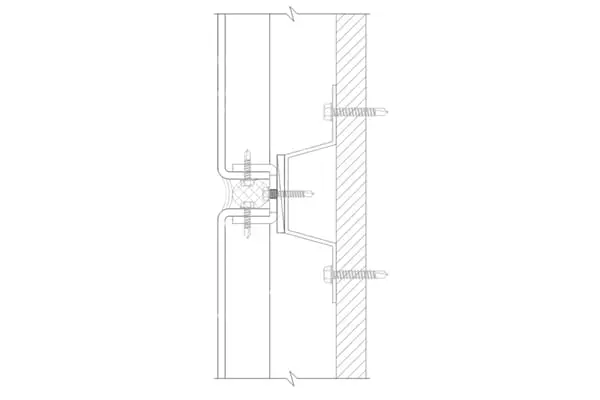
Reason 2: Contextual Coatings — Where Material Meets Meaning
The most architecturally significant innovation that Pure FreeForm has introduced to the metal cladding market is not a performance specification. It is a design concept: the idea of Contextual Coatings. Pure FreeForm has developed this concept into both a product philosophy and an educational program — one that offers AIA and IDCEC continuing education credits to architects and designers who wish to understand how contextual thinking in material specification can transform the relationship between a building and its environment.
The principle behind Contextual Coatings is straightforward but profound: the finish applied to a metal panel is not a neutral aesthetic choice. It is a communicative act that either connects the building to its site, its history, and its community, or disconnects it from all three. A cladding finish that merely covers a building surface — that provides waterproofing without meaning — is a missed opportunity. Pure FreeForm’s Contextual Coatings approach argues that every finish should be designed with the specific context of the building in mind, drawing from the colors, textures, and material traditions of the site to create a facade that feels like it belongs where it stands.
This philosophy produced one of Pure FreeForm’s most celebrated collaborations: the Portland Japanese Garden Cultural Village expansion by Kengo Kuma and Associates. For this project — Kengo Kuma’s first public commission in the United States — Pure FreeForm developed its Celeste Stone finish, a panel system composed of organic inks, white pearl, Lumiflon resins, and recycled materials that captures the pearlescent, layered quality of stone and integrates it into Kuma’s pagoda-like rooftop forms. The result is a cladding system that is simultaneously technically superior and culturally resonant — panels that perform in Portland’s wet climate while visually reinforcing the project’s Japanese cultural references and its relationship to the natural setting of the garden.
For architects interested in how material choices contribute to the experiential quality of a building, this collaboration between Pure FreeForm and Kengo Kuma is among the most instructive examples in recent North American practice. It demonstrates that a metal panel system, when designed with contextual intelligence, can contribute to a building’s cultural meaning as powerfully as its spatial organization or its formal composition.
For those interested in how major architects have used material innovation to create contextually significant buildings, the Guggenheim Museum Bilbao examined on this site offers a landmark precedent in the use of titanium panels by Frank Gehry — a building where the metal skin is inseparable from the building’s identity and its relationship to the light and water of Bilbao. Similarly, the Fenix Migration Museum explored here demonstrates how facade materiality can carry cultural narrative at the scale of an entire building.
Reason 3: The Specular Collection — Light as a Design Material
Pure FreeForm’s Specular collection represents the studio’s most ambitious exploration of the relationship between metal surfaces and light. Launched in 2020, Specular comprises twelve unique finishes — Emblem, Perlage, Brunello, Relic, Enox, Piombo, Harlem, Molten, Serra, Caxia, Akoya, and Hollywood — each of which is designed to interact with light in a specific and distinctive way, using physical texture and diffusive surfaces to create effects that flat-painted metal panels cannot produce.
The conceptual foundation of Specular, as articulated by Geoff Hahn, is the conviction that light closes the gap between architecture and perception. When a building’s surface responds dynamically to light — shifting in color, tone, and reflectivity as the sun moves, as cloud cover changes, as the seasons alter the quality of ambient light — the building becomes a living presence rather than a static object. Specular was designed to deliver exactly this quality of responsive, dynamic surface behavior in a metal panel system that is simultaneously highly durable and fully sustainable.
The twelve finishes of Specular explore four primary qualities of surface behavior: pearlescence, texture, fragmentation, and light spread. Pearlescent finishes like Perlage and Akoya create surfaces that shift between colors as the viewing angle changes, producing an iridescent quality that recalls the surfaces of shells and minerals. Textured finishes like Relic and Serra create physical depth that makes light visible across the panel surface rather than simply reflecting it. Fragmented finishes like Harlem and Molten create irregular surface patterns that distribute light in unpredictable and visually rich ways. Diffusive finishes control the spread of reflected light to create softness rather than glare.
Available in panel systems or as flat sheets, Specular’s single-skin aluminum composition is fully customizable in terms of design, pattern, color, gloss, texture, and scale. The collection is VOC-free, Red List-free, HPD compliant, and LEED credit qualified — derived from a minimum of 20% post-consumer recycled content and 100% recyclable at end of life. Its crack-resistant surfaces are easy to maintain, and Pure FreeForm’s Lumiflon resin coatings ensure unparalleled resistance against UV degradation, corrosion, chemical exposure, color fading, chalking, and diminished gloss over a projected lifecycle that extends well beyond conventional cladding systems.
Reason 4: MetaMetal — Durability With a 60-Year Life Cycle
Alongside Specular, Pure FreeForm’s MetaMetal collection represents the studio’s most technically comprehensive product line for projects requiring the highest levels of durability and long-term performance. Backed by a 20-year warranty and designed for a 60-year life cycle, MetaMetal is Pure FreeForm’s answer to the question that matters most to building owners and facilities managers: how long will this last?
MetaMetal’s 60-year life cycle claim is not a marketing projection. It is the result of Pure FreeForm’s use of minimally processed aluminum, organic pigments and resins, and the Lumiflon coating system that underlies the entire Pure FreeForm product range. The collection is 100% recyclable, derived from a minimum of 20% post-consumer recycled content, VOC-free, Red List-free, and HPD compliant — meeting the full range of sustainability certifications that leading architectural practices and their clients increasingly require as a minimum specification threshold.
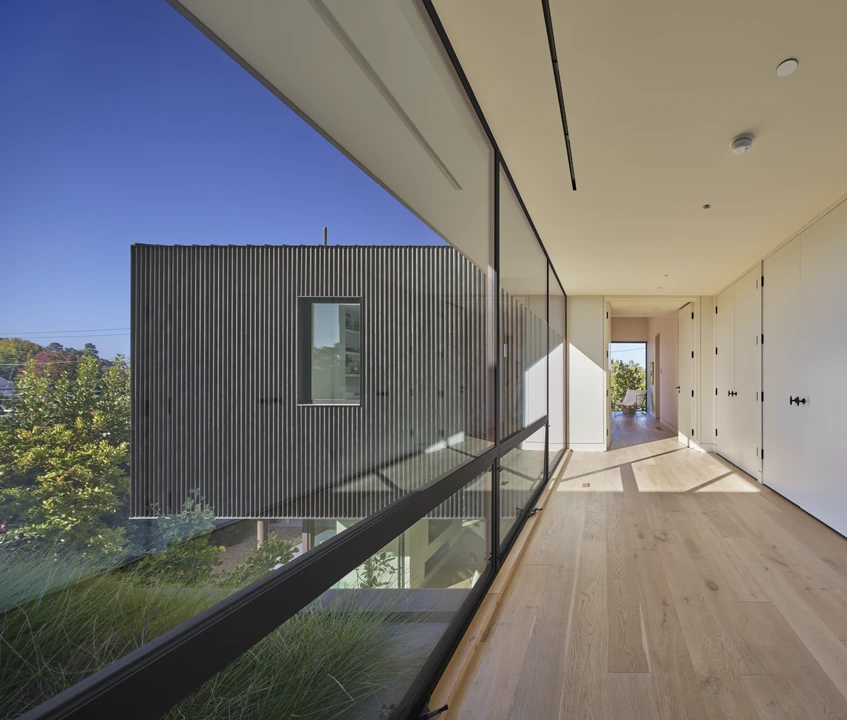
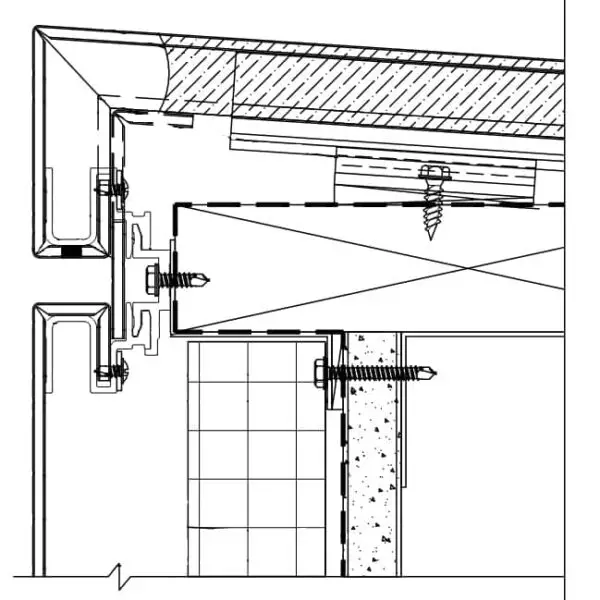
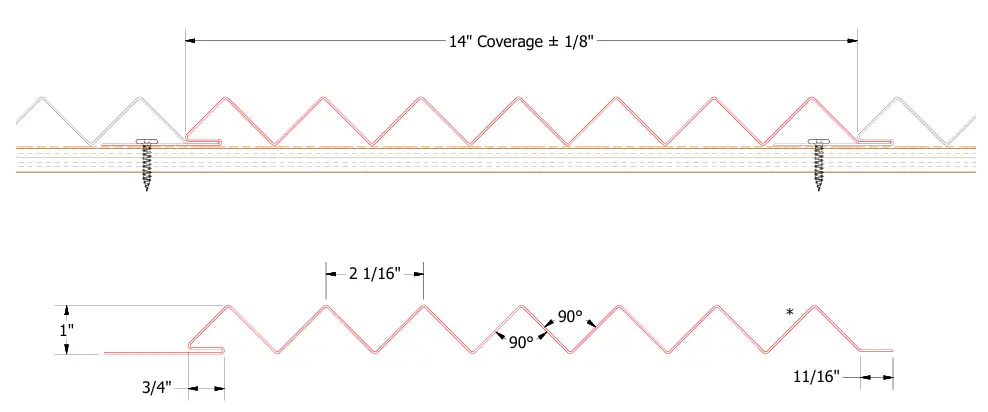
The flexibility of MetaMetal makes it applicable across the full range of architectural applications: exterior facade cladding, interior feature walls, soffits, ceilings, column covers, canopies, and more. The collection’s panels can be perforated, given acoustic backing, or made accessible for maintenance — options that extend its utility across acoustic, thermal, and maintenance-sensitive applications. Any of these systems can be customized to project specification, with options to transition from interior to exterior to provide continuity of material throughout a building.
For architects and building owners grappling with the lifecycle cost of cladding decisions — weighing the initial cost premium of high-performance systems against the long-term cost of recoating, maintenance, and eventual replacement — MetaMetal offers a compelling case for the economic as well as the environmental value of specifying durability from the outset.
Reason 5: Sustainability at Scale — LEED, HPD, and the Alloy Collection
Pure FreeForm’s commitment to sustainability is not a peripheral marketing consideration. It is embedded in the core of every product the studio makes, from the minimum recycled content requirements that apply across the entire range to the VOC-free, Red List-free, and HPD-compliant coatings that define Pure FreeForm’s environmental footprint.
The studio’s core product material — aluminum — is itself among the most sustainable options available in building materials. Aluminum is one of the most recycled materials on earth: approximately 75% of all aluminum ever produced is still in use today, and the recycled content of aluminum panels requires only 5% of the energy needed to produce primary aluminum from bauxite ore. By specifying a minimum of 20% post-consumer recycled aluminum across its entire product range and designing all of its panels to be 100% recyclable at end of life, Pure FreeForm has positioned itself at the most responsible end of the architectural metals market.
The studio’s newest Alloy collection extends this sustainability commitment into the next generation of product development. Described by Pure FreeForm as seeking to become synonymous with innovation and creativity and inspiring a new era of high-performing architectural excellence that keeps our shared future in mind, the Alloy collection represents the studio’s vision for where architectural metal cladding needs to go as the construction industry grapples with the imperative to decarbonize.
Pure FreeForm’s sustainability credentials align directly with the requirements of the most demanding green building rating systems. Its panels qualify for LEED credits across multiple categories, meet HPD (Health Product Declaration) standards for material transparency, and participate in the mindful MATERIALS library — a curated database of building materials that meet the highest standards of environmental performance and material health. For architects pursuing LEED certification, WELL building standard compliance, or Living Building Challenge materials requirements, Pure FreeForm’s product range covers the full spectrum of necessary certifications.
Reason 6: Collaborative Design Process — Site-Specific From First Conversation
What distinguishes Pure FreeForm most fundamentally from conventional building materials manufacturers is not its product range or its sustainability credentials, impressive as both are. It is its collaborative design process — the way Pure FreeForm works with each project’s design team from the earliest stages of a project to develop finishes and systems that are genuinely specific to the site, the program, and the design intent.
Most cladding manufacturers operate through a catalogue model: they produce a standard range of finishes and panel systems, publish that range in a catalogue or on a website, and expect specifiers to select from available options. Pure FreeForm operates differently. The studio’s design team works directly with architects, interior designers, and project teams to develop custom finishes that are unique to the project — finishes that cannot be specified from a catalogue because they do not exist in any catalogue. They are made for that project, on that site, for that purpose.
This collaborative process begins with an understanding of the project’s context: its geographic location, its climatic conditions, its cultural references, its relationship to the materials and history of its surroundings. From this contextual analysis, Pure FreeForm’s design team develops finish proposals that respond to these specific conditions — proposing textures, colors, and surface behaviors that will make the panel system feel contextually appropriate rather than generically applied.
The production capacity of Pure FreeForm’s manufacturing infrastructure — capable of producing up to 100,000 square feet of panels per day — means that this collaborative, custom approach does not come at the expense of schedule performance. Panels can be fabricated on-site or in the fabricator’s shop, providing flexibility that is essential in the complex logistics environment of contemporary construction.
This end-to-end design and production process — from contextual concept development through manufacturing and on-site or shop fabrication — gives Pure FreeForm a distinctive position in the architectural metals market: a manufacturer that thinks like a designer and a designer that performs like a manufacturer.
Pure FreeForm in Notable Architectural Collaborations
The depth and quality of Pure FreeForm’s architectural collaborations is among the clearest evidence of the studio’s position at the leading edge of the field. The roster of practices that have specified Pure FreeForm for significant projects reads like a cross-section of the most respected firms in contemporary architecture.
Kengo Kuma and Associates’ Portland Japanese Garden Cultural Village remains the most internationally celebrated Pure FreeForm collaboration. <cite index=”42-1″>The company’s signature Lumiflon resin, a next generation fluoropolymer that is incredibly resistant to harsh weather and maintains a long-lasting brilliant color, coats the panels of Kuma’s overhanging, pagoda-like roofs.</cite> The custom Celeste Stone finish developed for this project has been widely published and studied as an example of how contextual material specification can enhance the cultural coherence of a building.
KPF — one of the world’s largest and most prolific architectural practices, responsible for major commercial, mixed-use, and institutional projects across Asia, Europe, and the Americas — has specified Pure FreeForm for projects where the quality and customization of the cladding system were central to the design intent. Rafael Viñoly Architects, GWWO Architects, HGA, Roger Ferris + Partners, Bergmeyer, DXA studio, and Hollwich Kushner are among the other major practices that have worked with Pure FreeForm on built projects — each bringing specific design challenges that the studio has addressed through its collaborative, contextual approach.
The range of these collaborations — spanning institutional, commercial, healthcare, hospitality, and cultural typologies across multiple geographic contexts — demonstrates that Pure FreeForm’s philosophy of contextual, custom metal design is applicable across the full spectrum of contemporary architectural practice rather than being confined to a particular building type or market segment.
Why Pure FreeForm Matters for the Future of Facade Design
The architectural cladding market is enormous, and the vast majority of it operates on the assumption that standardization is the primary virtue a manufacturer can offer. Standard panel sizes, standard finishes, standard installation systems — these are the foundations of a market organized around the elimination of design complexity in favor of production efficiency and cost predictability.
Pure FreeForm’s existence is an argument against that assumption. Not an argument that standardization has no value — it clearly does — but an argument that the highest achievements of contemporary architectural design require something that standardization cannot provide: materials that are genuinely specific to the project and the place where they are used.
<cite index=”52-1″>If you can control the texture and how the light mobilizes on the surface, more people will see the semiotic benefits of how metal can help to contextualize spaces, and lend new ways to understand public spaces</cite>, explains Pure FreeForm’s Creative Director Geoff Hahn. This ambition — to use the behavior of light on metal surfaces as a means of contextualizing space and connecting buildings to their communities — is the core of what Pure FreeForm offers to the architects and designers who work with it.
The studio’s production of up to 100,000 square feet of panels daily, its network of fabrication partners that improves lead times and reduces costs, and its end-to-end design and manufacturing capability mean that this ambition is not confined to rare, highly-resourced projects. Pure FreeForm has made contextual, custom metal cladding accessible at the scale of ordinary commercial and institutional practice — not just for landmark buildings with unlimited budgets, but for the full range of projects where an architect cares enough about their building’s relationship to its place to specify materials that support rather than undermine that relationship.
Frequently Asked Questions
What is Pure FreeForm?
Pure FreeForm is an architectural metal design studio headquartered in St. Paul, Minnesota, specializing in bespoke finishes and cladding products for exterior and interior architectural applications. Pure FreeForm designs and manufactures custom metal panel systems for facades, interior walls, ceilings, soffits, column covers, and more, working collaboratively with architectural design teams to produce site-specific finishes.
What coating system does Pure FreeForm use on its panels?
Pure FreeForm uses FEVE Lumiflon resin as its signature coating system across all product lines. Lumiflon is a next-generation fluoropolymer that meets the AAMA 2605 specification for superior performance coatings, offering exceptional resistance to UV degradation, corrosion, chemical exposure, color fading, chalking, and loss of gloss. This makes Pure FreeForm panels significantly more durable than conventional PVDF-coated metal panels.
Is Pure FreeForm sustainable?
Yes. Pure FreeForm’s entire product range is built on a sustainable material foundation. Its core material — aluminum — is produced with a minimum of 20% post-consumer recycled content and is 100% recyclable at end of life. All Pure FreeForm products are VOC-free, Red List-free, and HPD compliant. The studio’s products qualify for LEED credits and participate in the mindful MATERIALS library.
What is Pure FreeForm’s Specular collection?
Specular is Pure FreeForm’s premium collection of twelve unique metal finishes designed to interact with light in specific and distinctive ways, using physical texture and diffusive surfaces to create dynamic, responsive facade behavior. The twelve finishes — including Emblem, Perlage, Brunello, Relic, Enox, Piombo, Harlem, Molten, Serra, Caxia, Akoya, and Hollywood — explore pearlescence, texture, fragmentation, and light spread. Specular is VOC-free, LEED qualified, and made from a minimum of 20% recycled content.
What notable architectural projects has Pure FreeForm worked on?
Pure FreeForm has collaborated with some of the world’s most respected architectural practices including Kengo Kuma and Associates (Portland Japanese Garden Cultural Village), KPF, Rafael Viñoly Architects, GWWO Architects, HGA, Roger Ferris + Partners, Bergmeyer, DXA studio, and Hollwich Kushner. The Portland Japanese Garden project, featuring Pure FreeForm’s custom Celeste Stone finish on Kuma’s pagoda-like pavilion rooftops, is among its most internationally recognized collaborations.
What is Pure FreeForm’s Contextual Coatings concept?
Contextual Coatings is both a product philosophy and an educational program developed by Pure FreeForm. It is based on the principle that a metal panel finish should be designed with the specific context of a building in mind — drawing from the colors, textures, and material traditions of the site to create a facade that feels contextually appropriate rather than generically applied. Pure FreeForm offers AIA and IDCEC continuing education credits through its Contextual Coatings program.
How does Pure FreeForm’s design process work?
Pure FreeForm works collaboratively with each project’s design team from the earliest stages to develop custom finishes and panel systems specific to the project’s site, program, and design intent. Rather than selecting from a standard catalogue, architects work with Pure FreeForm’s design team to develop unique finishes that respond to the specific contextual conditions of the project. Pure FreeForm can produce up to 100,000 square feet of panels per day, and panels can be fabricated on-site or in the fabricator’s shop.
What is Pure FreeForm’s MetaMetal collection?
MetaMetal is Pure FreeForm’s most durable product line, designed for applications requiring maximum longevity. Backed by a 20-year warranty and engineered for a 60-year life cycle, MetaMetal is constructed from minimally processed aluminum with organic pigments and Lumiflon resin coatings. It is 100% recyclable, derived from minimum 20% post-consumer recycled content, VOC-free, Red List-free, and LEED qualified.
Conclusion: A Studio That Thinks in Material and Meaning
Pure FreeForm occupies a genuinely unusual position in the architectural products market. It is a manufacturer that thinks like a design studio — that approaches every project with the same questions an architect asks about context, meaning, and the relationship between a building and its place. It is a design studio that performs like a manufacturer — with the production capacity, technical standards, and fabrication networks to deliver custom, contextual products at commercial scale and within commercial schedules.
The six reasons examined in this post — the Lumiflon performance advantage, the Contextual Coatings philosophy, the Specular collection’s mastery of light, the MetaMetal collection’s 60-year durability, the industry-leading sustainability credentials, and the collaborative design process that makes every panel genuinely site-specific — together constitute a compelling argument for why Pure FreeForm is not simply another cladding manufacturer but one of the most important and most thoughtful contributors to the future of architectural facade design.
For architects who believe that the materials from which they build are as much a part of their design as the spaces they create, Pure FreeForm is an essential collaborator. For the buildings that result from those collaborations, the evidence is visible in every facade that glows with the quality of its surface, responds to the light of its setting, and communicates something genuine about where it stands.
Sources: Pure + FreeForm; Architizer Journal; Archello; Metropolis Magazine; Design Dekko; Global Design News; Mortarr; LinkedIn — Pure + FreeForm; ArchDaily catalog listing